Tired of the social media treadmill? Download the free local visibility checklist ➔

Why Marketing Feels Wrong for Many Health & Wellness Businesses
By Jules White with guest Peta O'Brien-Day | Published 26th October 2026 | reading time: 10 minutes
🎙️Listen to this epsiode🎙️
"If we care about those people, if we want to serve, if we want to help them, if we want to make their lives and the world a better place, then the tools that we use should also reflect that." - Peta O'Brien-Day
Have you ever sat down to work on your marketing and come away feeling worse than when you started? When I first started my business, I signed up for a day-long messaging workshop. I ended up in tears, because trying to cram everything I do onto one page felt so stressful, and when it still wasn't quite right, I wondered whether I was the problem.
If you run a health or wellness business, or any business that helps people get better and then move on, you'll always need new clients coming in. But so much of the marketing advice out there seems to ask you to make people feel worse before they buy, and that sits uncomfortably when your whole purpose is to help.
In this episode of The Website Success Show, I talked with brand messaging strategist Peta O'Brien-Day about why traditional marketing feels so wrong for so many of us, where the line sits between honest information and manipulation, and a different way to tell your story that's built around community rather than a lone hero.
Key Takeaways:
The tools should match your reasons for starting:
If you started your business to help people, marketing that treats them as leads to be pushed through a funnel is always going to feel wrong.
Oversimplifying hurts you and your clients:
Squeezing your work into one sentence strips out what makes you different, and it underestimates people who are perfectly able to handle nuance.
Urgency and scarcity are fine when they're true:
A real deadline or genuinely limited appointments are just honest information; fake countdown timers and made-up spaces are not.
You don't need a big before-and-after:
Instead of promising a huge transformation, explore what changes for your clients because you exist, whether that's confidence, community or progress along a path.
Your story can be about community:
The Heroine's Journey ends with connection rather than a lone victory, which fits work where people grow alongside others.
Why traditional marketing can feel so wrong
Many of the people who listen to the show help their clients get better or solve a problem, and then those clients don't need to keep paying them. Think physios, or mental health professionals. That's lovely, but it means you're constantly having to market.
Peta pointed out that a lot of traditional marketing is built on a very narrow idea of moving people from one place to another to get them to buy. Much of it dates back to the early 1900s, and while the mediums have changed, the thinking often hasn't moved on.
The language gives it away. We talk about funnels, leads and pushing people along a pipeline, as if the people we're talking to are objects with no agency. That doesn't fit with why most of us started our businesses in the first place.
What Peta tends to see is that people end up with two choices. Either they trade in their values and use those methods because they want to help more people, or they decide they can't do that, so they don't market their business at all. Then they help fewer people, and they don't have the money and resources they need to live a good life themselves.
The problem with squeezing your message into a formula
I discovered Donald Miller and StoryBrand when I first started my business. It sounded amazing, which is why I did that workshop, and why it was so upsetting when it didn't work for me.
Peta's view is that the big problem with that approach is oversimplification. If you sell something very simple, a seven-step journey might work. But most of us aren't selling something simple, especially when we work with people, because humans are not simple.
When we chop out all the interesting bits of what we do, it gets harder to stand out, and our business starts to feel less like ours. Then we want to talk about it even less. If this is something you've struggled with, I also explored standing out in my conversation about brand voice and strong positioning.
Oversimplifying also does a disservice to the people we're talking to. We're told to dumb everything down, but our clients live in a complicated world and can cope with more than one idea at a time. Assuming they can't damages the connection between you, which is the last thing you want in a service-based business.
Scarcity, urgency and pain points: where the line sits
The second group of things we're encouraged to use are persuasive tactics. Peta listed plenty that will probably feel familiar:
- Saying there are only five spaces left on a digital course that could be sold to many more people
- "Live" webinars that are actually recordings
- Disappearing bonuses and countdown timers
- Value stacking, with made-up figures for what an offer is worth
- Picking a pain point and agitating it until someone feels they urgently need you
That last one really struck me. I once saw a website template from a brand I liked that included a line about this being the point where you twist the knife. I didn't like that at all.
"Why would you want to make them feel worse?" - Peta O'Brien-Day
Peta was clear that some of these tools aren't wrong in themselves. If you're running an event on a certain date, telling people the deadline is just honest information. If there are only so many seats on a flight, that's real scarcity.
It reminded me of my salon days. At this time of year we'd ask clients whether they wanted to book their Christmas appointment, because we genuinely were getting booked up. Christmas was the real urgency, not something we'd invented.
Marketing as helping people decide
The important thing, Peta said, is how your marketing makes people feel and whether you're respecting their sense of agency. Her definition of marketing is giving people the information they need to make the decision that's right for them.
What a sales page can do instead of twisting the knife:
- Tell someone who this service is for
- Explain what problems it can help with, in a way that makes them feel understood and gives them hope
- Show the outcomes you've brought for people like them, so they have proof and reassurance that what they want is possible
I looked at this from the client's side in an earlier episode, where a local firm's website talked all about itself rather than the stress it could take away for the people looking for help. You'll find it in the resources below.
Sometimes the answer will be no, and that's fine. No doesn't have to mean no forever. If someone leaves your sales page feeling they'll come back when the time is right, rather than panicking that they've missed out, that feels much more like building a long-term relationship.
Peta also talked about how funnels treat everyone who doesn't buy straight away as a lost lead. To me, it's a lot like networking. You may not meet a client at an event, but you never know who those people know or who they'll talk to the next day. I've shared more about this in how networking helped me grow my business without social media, and relationship building is a big part of why I believe social media is optional.
Talking about results honestly
Another manipulative habit in online marketing is holding up big promises based on one client's results, without mentioning the context that made those results possible. When new clients don't get the same outcome, they're often told they didn't commit, work or invest enough.
I've seen this so much, and I know how soul-destroying it can feel to think you were the problem. In the SEO industry, you see sales pages promising ten times the traffic. Those numbers can be manipulated, and they don't show the nuance. You're not going to buy a beginner's SEO course and get those results, because it takes time, and so much else plays a part, like your messaging and your offer.
Instead of promising a big transformation, Peta encourages people with values-based businesses to explore a broader question: what changes for your clients because you exist? It can be about community, confidence, or simply being further along the path. You still need to give people a reason to buy, but it can be your ethos, the connection you build, or the self-belief you've helped someone find.
You don't have to scale to be successful
This has become more and more apparent to me this year. On holiday, I read a book about consumerism that opened my eyes to how much we're sold, including online offers. There's so much pressure to do more, and if you're not hitting 10k months, it can feel like you're failing.
Peta explained that the traditional idea of success, starting small and growing as big as possible, comes from a time when a very narrow type of person ran a business. Now the barriers to entry are lower than ever, and many people running businesses have caring responsibilities or chronic health issues. Their goal might be to earn enough to be comfortable in as few hours as possible, without burning out.
Peta built her business from a $15 blog post, over six years, and she loves what she does. She has no interest in building an agency, and neither do I. As she put it, if you've built something, whatever size it is, you should be proud of it.
The Heroine's Journey: a different way to tell your story
StoryBrand is built on the Hero's Journey. The hero goes on a quest, meets a guide, defeats the dragon and walks off into the sunset, triumphant but alone. In that story, relationships and community hold him back, and asking for help is a weakness.
Peta came across an alternative in Gail Carriger's book The Heroine's Journey. Something bad still happens, but the heroine gathers people around her, delegates to whoever is best placed to help, and they solve the problem together. There's often more compromise than conquest, and the story ends with her in community rather than isolated.
Peta pointed out that you can see this structure in Buffy the Vampire Slayer and Ted Lasso, but it's missing from marketing. If you run a group membership, for example, people don't solve their problems alone, and there's nowhere for that in a Hero's Journey framework. So she built the Regenerative Story Framework, with community running all the way through it.
I've always had a problem with the Hero's Journey, and now I'll be looking out for the Heroine's Journey everywhere. I love the idea of using it in our marketing in a way that doesn't feel like we're manipulating anyone.
Notable Quotes:
"Marketing, I would argue, is giving people the information that they need to help them make the decision that is right for them." - Peta O'Brien-Day
"Humans are not simple." - Peta O'Brien-Day
"No doesn't have to mean no forever, does it?" - Jules White
"If you've built something, whatever size it is, you should be incredibly proud of yourself and you should shout about it to more people." - Peta O'Brien-Day
Episode at a Glance:
- 00:00 Welcome and introducing Peta
- 02:09 Why traditional marketing feels wrong for businesses that help people
- 07:46 StoryBrand and the problem with oversimplifying
- 11:48 Scarcity, urgency and agitating pain points
- 15:00 When urgency and scarcity are honest
- 16:03 Respecting agency and helping people decide
- 17:42 Funnels, relationships and networking
- 19:08 Rethinking results and big promises
- 25:18 Growth, scaling and your own measure of success
- 33:12 The Heroine's Journey and the Regenerative Story Framework
- 38:22 Where to find Peta
Links to Resources Mentioned:
- 🔗 Peta's website, Words By Peta - brand messaging strategy for businesses that want to sell without trampling on their values
- 🔗 The Regenerative Story Map - Peta's tool for exploring your brand story, based on her framework
- 🔗 Peta's blog comparing the Hero's Journey and the Heroine's Journey - if you'd like to dig deeper into the difference
- 🔗 The Soap Box Podcast - Peta's podcast for business owners with a social conscience
- 📖 The Heroine's Journey by Gail Carriger - the book that introduced Peta to this story structure
- 🔗 My episode on whether your website is saying what clients really need to hear - where I look at a website from a customer's point of view
- 🔗 My episode on choosing an intentional business - where I talk about the book on consumerism I read on holiday
- 🔗 My consulting sessions - if you'd like one-to-one help with how your website talks about what you do
- 🚀 The Website Growth Club - my membership for established business owners who want their website to bring in clients without relying on social media
Build a business where social media is optional
Inside The Website Growth Club, we help established business owners get found online through their website, without posting every day.
Find Out More∧ Transcript
Welcome and introducing Peta
Jules White: So, hi, welcome back to the Website Success Show. It's Jules here, and today I am welcoming a very special guest who I'm very excited to talk with.
So welcome, a very warm welcome to Peta O'Brien-Day. It's great to have you here, Peta; welcome.
Peta O'Brien-Day: Thank you very much. I'm very excited to chat.
Jules White: Yes. So am I; I am really excited to talk about what we're going to talk about today.
Um, a few weeks ago, I was doing some planning for podcast episodes for the rest of the year, and I was thinking about what kind of things, what kind of topics did I want to cover? And this was one that I had pencilled in, that I would really love to find somebody to have a chat with about what we're going to talk about today.
So I think it's perfect timing. We met through the Female Founders Rise community, and I saw a post that you put in the circle within the community off of social media, which is something that I'm spending more time in at the moment.
So I listened to some of your podcasts and read through some of your blogs, and I just thought actually this would be a, you know, great, a great topic for the show. So, I would love you to introduce yourself and let us know about you and what you do.
Peta O'Brien-Day: Cool, okay. So I'm really, really excited to be here; thank you for having me.
Um, I am a brand messaging strategist, uh, and I work with brands who are trying to make the world a better place in whatever way that works out. Whether you are an e-commerce brand that has a brilliant product that makes someone's life easier, or whether you are a coach who, um, helps people with mindset and self-belief, uh, or whether you are a service provider who helps other businesses shout about the things that they do.
I spent 15 years as a youth worker before I moved into marketing. Uh, so everything that I do kind of comes from that place of empathy, kind of real listening, um, human psychology, but not in a kind of, "How can I manipulate you to do what I want?" kind of way, in more of a, um, of a giving you a sense of agency way.
Uh, and that bleeds into, yeah, the work that I do with my clients and the work that they do with their customers. Um, yeah, awesome.
Why traditional marketing feels wrong for businesses that help people
Jules White: Fantastic, amazing. So, um, just to give you a little bit of context of the kind of listeners that we generally have to the show, they are a lot of small business owners, mainly women, um, a lot of location-based businesses, but they are people that are doing good in the world.
So that's definitely some, uh, some, you know, a good audience there really. So, um, they're often also people who help people, and they help them get better or they help them solve the problem that they have, and then they don't always need to keep paying them money.
So things like, you know, physios and mental health professionals who help people to get better. So there is often a problem where we are constantly having to market.
They will always need new clients coming into their business. What do you think is the problem with traditional marketing for those kind of businesses, those businesses who care about the world, who don't want to be, you know, taking advantage of people; what's the problem for those kind of businesses, do you think?
Peta O'Brien-Day: Oh, so many problems. Um, hearing you talk like that reminds me of, because this is - and I'm ageing myself - but it reminds me of the episode in Friends where Phoebe goes, um, that she complains that she's got no clients at the moment as a massage therapist.
Um, and they say, "What happened?" And she said, "Well, I'm such an idiot; I taught a 'massage yourself at home' workshop, and they are."
Um, so yeah, sorry, that just made me think of how that doesn't necessarily work very well, no. Um, yes, so a lot of kind of traditional marketing, um, practices and methods and techniques, um, are built around a very narrow idea of how you move people from one spot to another, or from one mindset to another, or one kind of opinion to another to get them to buy your thing.
Um, and most of it is based on stuff from the beginning of the 1900s. So there are books on my shelf from like, um, Claude Hopkins and, um, and a whole bunch of other people from the thirties and the twenties and all that kind of thing.
Um, and we've not, it feels like we've not really moved on other than the methods and the mechanisms, like the mediums that we use. And a lot of it is based around manipulating people's actions.
And I think if you start a business where, um, you are doing this to make the world a better place or to make someone's life better, um, you're doing it to help, you're doing it to - "serve" is a loaded word, but essentially you are doing it to serve other people. You are necessarily -
Jules White: You're doing it because you care about people.
Peta O'Brien-Day: Exactly, yes. You are not necessarily doing it because, in a traditional business sense, you saw a gap in the market that you could exploit and make money from.
And there's nothing wrong with that in itself. Like, part of the messaging work that I do with some scale-ups that I work with, it's finding that gap in the market and how they can position themselves.
But mostly I'm doing that so that they can reach more people that they can help. And like a lot of these kind of mechanisms and methods, there's maybe nothing wrong with them in and of themselves, but how we use them has become very manipulative.
We talk about funnels, we talk about leads, we talk about, um, pushing people along a pipeline, all these things which, um, approach the people that we are working with or trying to talk to as inanimate objects with no agency who we are just moving from one place to the other, whether they like it or not.
Jules White: Mm-hmm.
Peta O'Brien-Day: Um, and yes, that makes it easier to talk about in terms of jargon and the language that we use. Um, but that doesn't necessarily mesh well with why a lot of the people that I and you work with started those businesses in the first place.
If we care about those people, if we want to serve, if we want to help them, if we want to make their lives and the world a better place, then the tools that we use should also reflect that. I'm not a fan of the whole "the ends justify the means" thing.
Um, and when you start a business and you arrive in the world of marketing, and you realise that you actually do have to market your business if you want to keep the lights on and people coming in - um, especially in fields where you get people better and then they go away, which is lovely, but then you have to get more people - um, all of the advice that you are presented with is that traditional marketing advice. Um, like, "These are the tools that you use to make people do stuff, this is the language that you use to manipulate people, this is how we push people from one thing to another."
Um, and I think that's a massive problem. And what I tend to see happen is either people have to make a choice between almost like trading in their soul for the ability to help more people and to use those kind of methods because they're like, "Well, I need to help more people and this is the only way to do it."
Or they decide they can't mesh that with their values, and therefore they don't shout about what they do. They don't market their business, they don't sell effectively, and so then they help fewer people and they don't have the money and the resources that they need to live a good life themselves.
Jules White: Yeah, yeah.
Peta O'Brien-Day: That was very, very long; I apologise.
StoryBrand and the problem with oversimplifying
Jules White: No, no, that, yeah, definitely. So what are the kind of things that we are encouraged to do?
I think it's good because I've been exploring this topic a little bit - definitely not as much as I'd like to - but exploring it over the last couple of years, especially as I did quite a lot. I know you have some very, um, definite thoughts on StoryBrand and the whole bro-marketing and that kind of, you know, the Hero's Journey.
And when I first started my business, I discovered Donald Miller and read the books and everything. And it sounds amazing; it sounds fantastic.
And I even did one of the workshops, and I have to say I ended up in tears on that workshop. It was a day-long workshop where you get your messaging sorted, basically.
And that was kind of how it was sold. And I ended up in tears because it was so stressful trying to cram it all into one page that then just wasn't quite right.
And it felt so, it felt like, "Oh, if I don't get this right, then am I a failure for not being able to sort of get this sorted?" So what are the kind of things there that we are encouraged to use that make - and because I think as well for listeners, if they maybe have never thought about this, they might not even realise that this is why marketing feels so hard, because they haven't even realised that they're actually doing things that are giving them, you know, like making them feel horrible about what they're actually saying in the messaging.
Peta O'Brien-Day: Yeah. So probably two, um, two groups or two kind of like sections of things.
One is the StoryBrand idea, and for me the overall problem with that is oversimplification on several different levels. One, like you just said, trying to cram everything that you do in its nuance and gorgeousness and personality and, yeah, and all that jazz.
Trying to cram it into this one sentence or this seven-step kind of journey, if you are selling something very simple like a picture frame. Although, saying that, I worked with a brand last year that was actually selling picture frames and it didn't really work for them either, but, um, like if you're selling something very simple, then sure, you can follow that Hero's Journey StoryBrand thing all the way to the end.
But a lot of us aren't doing things that are simple, um, especially if we're dealing with humans, because humans are not simple. So that oversimplification does us a disservice because it makes us feel like we have to chop all the interesting bits of what we do, um, which makes differentiation harder in a busy marketplace, but also makes our business feel less like ours, which means that then we want to do less marketing.
We want to talk about it less because it doesn't feel like it fills us with the joy that we wanted it to fill us with when we started this business. But the oversimplification also harms the people that we are talking to; we are told again and again that we have to make things less complicated.
We have to simplify, we have to dumb things down. We have to dumb down the reading level of whatever we write, we have to write in short sentences, that nobody reads anything anymore, that everything has to be images, blah, blah, blah, blah.
And I think that does the people that we talk to a disservice because the people that we talk to have brains and thoughts and can cope with more than one idea being presented to them at a time. They can cope with nuance, they can cope with complexity because they exist in a world that is ridiculously nuanced and complex.
And if everybody goes down that oversimplification route, then yeah, then we harm ourselves and we harm the people we're talking to. And yeah, if you walk around all day thinking that the people you're talking to are so stupid that they can't hold a two-clause sentence in their head on a website hero section, then that doesn't necessarily endear them to you or you to them.
Like, that damages that connection that's between the two of you, which especially in service-based industries is not what you want.
Jules White: Yeah.
Scarcity, urgency and agitating pain points
Peta O'Brien-Day: So there's the StoryBrand oversimplification I have a massive problem with. We'll come back to the Hero's and Heroine's Journey in a minute.
But the other thing, the other sort of group of things that we're told to use, are these manipulative, persuasive marketing and copywriting tactics. So things like scarcity.
So saying, "I have five seats left," when actually if it's a digital product or course, like you could sell it to loads more people. But you are told that if you say that there are fewer spots, then more people will be more likely to act and buy.
So scarcity, urgency, like those whole live webinar things that aren't live, like, "It's happening in 11 minutes, sign up," and you are just watching something recorded. Yeah, so scarcity, urgency -
Jules White: Disappearing bonuses and that kind of stuff.
Peta O'Brien-Day: Disappearing bonuses, yeah, kind of like value stacking, offer stacking. Um, "This is worth $150 million," even though you've literally never sold it for that and you've just made that number up out of your head.
Yeah, so countdown timers, things like that, and then also stuff like pain points. So we are told that there are a whole bunch of copywriting techniques.
I started out in content writing and then copywriting, and then kind of like expanded to messaging, but I spent a lot of time learning conversion copywriting. And it is an incredibly useful tool.
But there are things like the frameworks that we're taught to use: you pick a pain point, like something that is really causing someone pain, and then you have to agitate it. You have to poke at it to make them realise that it's so, so bad that they immediately need your solution.
You are the only one that can solve their problem, but in order to get to that, you have to make them feel worse.
Jules White: Yeah.
Peta O'Brien-Day: And that is an anathema to me and probably a lot of people that we're talking to. Like, why would you want to - when the whole point of you and what you do is to make someone feel better?
Jules White: Yeah.
Peta O'Brien-Day: Why would you want to make them feel worse?
Jules White: And I've seen this in website templates actually with a brand that I really did like what they did. And I saw this in one of their templates where it says something like, "This is the point where you twist the knife," and I was just like -
Peta O'Brien-Day: Yeah.
Jules White: I don't like that.
Peta O'Brien-Day: Why? No, like a weapon.
I was reading a book by someone who I do respect and it has an awful lot of really good ideas. But, at one point she was talking about "weapons of mass conversion."
And I'm like, why? Like, why is that the language that we're using in a time in our world and society where everybody's nervous system is like, is shot?
Like we are all, we are all like, we are wiped out; our nerve endings are like live all over the place. Why would you come into a situation and a context like that and start doing things like twisting the knife, or poking at pain points, or like the moment of highest tension, all those kind of things?
When urgency and scarcity are honest
So yeah, so a lot of those psychological kind of tools and tricks and tips are all about manipulating people's behaviour. And there's nothing wrong with some of those things in themselves, and I think that's really important to say.
So like urgency: if you are running an event and the event is on a certain day and you need people to make a decision by a certain time for various reasons, then it's completely realistic to just tell someone when something is happening and to tell them when the deadline to kind of like sign on to that is. That's urgency.
Mm-hmm, that's like presenting people with that information, and that's fine. Scarcity: like if there's a flight and there are so many seats on a flight, mm-hmm, like you can't make more seats on a flight; that essentially is scarcity. If -
Jules White: You're a one-to-one service provider, you've only got so many appointments left. I remember when I was back in the salon, we would always say to clients like, this time of year, "Oh, do you want to get your Christmas appointment booked in as well because we're getting booked up?"
And it was true, we were getting booked up, but there again, Christmas is going to come around and that is the actual urgency rather than -
Respecting agency and helping people decide
Peta O'Brien-Day: Exactly. So there is nothing wrong with using those tools.
The important thing to bear in mind is how they make the person you're talking to feel, and whether you are respecting their sense of agency when you are selling, essentially. And marketing, I would argue, is giving people the information that they need to help them make the decision that is right for them.
And you can frame a sales page around that rather than something that tells you to twist a knife: telling someone who this particular service is for, telling them what problems it can help them solve in a way that makes them feel understood and seen and gives them hope. Demonstrating what results and outcomes you have brought for other people like them to give them proof and reassurance that what they want is possible.
All of that is really, really important because, if people don't have that information, then how can they make a decision that then is going to help them?
Jules White: Yeah.
Peta O'Brien-Day: And sometimes the decision might be no, but giving them that information is, yeah, is selling to them, is helping them decide. And -
Jules White: No doesn't have to mean no forever, does it, as well? And I think actually if somebody leaves your business and leaves your sales page not feeling like, "Oh my God, I've really missed out."
Peta O'Brien-Day: Mm-hmm.
Jules White: And actually they think, "No, I know I'm going to come back to that when the time is right," then yeah, certainly for me that feels a lot more like longer-term relationship building with people. So -
Funnels, relationships and networking
Peta O'Brien-Day: Yeah, definitely. And I think that's another thing that often is really prevalent in like the online marketing, bro-marketing type world, is that with this funnel, you pull people in the top with ads or with social content or blogs or whatever.
You pull people in the top and then you catch the people who you are able to catch. Everybody else falls out of the funnel, and then they're gone.
Like, they're not worth going back to, they're not worth building that relationship with. If they don't buy in that moment within your timetable, then it's not possible, and it's not worth it.
So they are worthless kind of leads that have flown away, and now you just concentrate on pushing more people through that funnel. There's a, yeah, there's kind of a missing of the value of building that longer-term connection that doesn't immediately result in sales.
Jules White: Yeah, yeah. It is almost a bit like networking as well, really, where actually you also may not meet a client when you go to a networking event, but you never know who those people know.
You never know what conversations they're going to have the next day. And they might have been through that funnel and then actually they speak to somebody the next day that you would be perfect for.
So, yeah, I think relationship building I think is one of the best ways to actually grow any business really, you know? So -
Peta O'Brien-Day: Yeah, definitely.
Rethinking results and big promises
Jules White: Can we talk a little bit about results? Because I definitely was very interested from your - I listened to one of your podcast episodes that was about a workshop that you did, and you kind of talked through, "I need to sit down and do the work that you like."
There were a few questions that you placed, and I've listened to that a couple of times. I always listen to podcasts in the car, so I always end up with about 10 that I need to go back to, but, um, I'm really interested in your thoughts on results for clients as well.
Peta O'Brien-Day: Yeah. So I think again, one of the manipulative things that happens in marketing, and online marketing in particular, is that we find we hold up these great big promises to our clients.
And then we tell them that they can get this thing, um, because maybe one of our previous clients has got this thing. What we don't tell them is that there were specific contexts and specific scenarios and things that had to be in place in order for that client to get that thing.
And only part of the result was anything to do with us and what we were providing. We might have been great, we might have been brilliant, but unless you can replicate that with like a statistically significant number of people that have different circumstances and kind of different contexts, you can't - like, that's not proof that you've done that thing.
And then what happens is people will come onto our programmes or come in and take up our services, or join our communities, and they don't get the results that we promised. And we tell them that that's because they didn't commit enough, or they didn't work hard enough, or they didn't invest enough, or they didn't believe in themselves enough, or they weren't willing to do the things that you needed to do to get those results.
And often people I talk to will be told to do some of these manipulative things that we talk about in order to get those results. And if they don't want to do them, then there's no alternative.
So what I tend to talk about instead with people who have values-based businesses, for whom their ethics are a real kind of like strong part of how they market, is instead of promising this big transformation, which is what they're told to promise even if that's not what their kind of work is about, is to think more broadly in terms of what changes for their people, their clients, their customers - what changes for them because you exist? And it doesn't have to be a one-sentence brilliant transformation statement.
Like, it can be more nuanced. It can be about community, it can be about you feeling more confident in yourself, it can be about you being further along this path and not necessarily right at the end of the path.
Jules White: Yeah.
Peta O'Brien-Day: Yeah, it can be nuanced. It can be complicated.
If you explore that question, which is what I did in this workshop a couple of weeks ago, there's more space for talking about results that aren't money-based or aren't revenue-based, and aren't that big massive before-and-after transformation. Yeah, but you have to allow yourself that space to explore it first, and then you are freer to talk about it with other people.
Jules White: Yeah, yeah, I think it's such an interesting topic actually. And I definitely have had this over the last few years; I think so many people have been through a lot of the online courses and programmes and things, and certainly in the online world in particular, mm-hmm, that people have felt that pressure, or it's not even - well, it is pressure, but it's that thing of, "Oh yeah, maybe if I just do this, then I can get those same results."
And when you've been through maybe one or two of those, it's almost soul-destroying really that you then feel like you were the problem because you haven't hit the results that are there on the sales page, you know, the same as somebody else. So yeah, I think it's, um, it's definitely something that hearing you say that was quite like, "Oh, okay, it's all right."
Because especially in the SEO industry, it's like, "Oh yeah," you know, you see figures on sales pages of 10x-ing traffic and this and that, and it's like, well, firstly the numbers can be manipulated very much anyway. And it just doesn't give that nuance of, actually this is not going to happen; you are not going to buy a beginner's SEO course and then get these results.
You know, it just doesn't happen that way; it takes time. And there's, again, it's all the other stuff: like if your messaging isn't right, and if your offer itself you're not already confident in selling that, and things haven't changed that then make that not sell as well, then there's so much to it.
I really think there is. So it's very refreshing to hear that actually it's okay not to have that big transformation there on your sales page.
Peta O'Brien-Day: Yeah, I think that it is important that you have something else that demonstrates the worth of working with you or of what you do. So you are trying to help people make the decision to work with you or not.
And for some people, for some businesses, that might be actual results. But it might be something else, and talking about that other thing and the other benefits and the other reasons why working with you is great, that's really, really important.
Jules White: Mm-hmm.
Peta O'Brien-Day: So talking about your ethos, talking about the connection that you build with your clients or how you care about them and value them, or talking about how you've helped someone get a better sense of self-belief. But that does involve, yeah, that does involve still talking about it.
Jules White: Mm-hmm, yeah, you still need something there, some reason for people to buy, yeah.
Peta O'Brien-Day: Yeah.
Growth, scaling and your own measure of success
Jules White: Yeah, definitely. So something just popped into my head then and just completely popped back out again.
Oh no, sorry, it'll come back at some point. So you also, in some of your podcast episodes, talk about not having to scale for the sake of scaling.
And this is something that has definitely been like just becoming more apparent to me, particularly this year, that we have all of this stuff about growth and like more and more and more, and that everything's got to be more. We've got to produce more content, we've got to buy more stuff, we've got to, you know, that we need to keep replacing everything.
I read a great book; I was on holiday last month and I read a great book about consumerism, and I feel like my eyes have been opened to it really in terms of how we are just sold to for everything. And it applies with online offers as well as just general stuff that we buy.
And with that thing of if we are not doing more, if we're not scaling, if we are not hitting the 10k months, then we are a massive failure and, you know, worthless almost. And I'm interested in your thoughts on that really.
Peta O'Brien-Day: Oh, so many thoughts, okay. So, I mean, on a macro level, I think that the concept of constant growth and scaling and stock market and GDP and all those kind of things does not fit with a planet that is finite.
Like, it just doesn't work; you can't carry on. So our whole concept of capitalism is broken, but that's a whole other podcast.
Jules White: Yeah, maybe that's the one we need to come back and have a chat about that.
Peta O'Brien-Day: Maybe. But when you take it down to like a micro scale with individual businesses, again, it's that idea that there is only one way of being a business owner, and the way of being a business owner is that traditional way of being a business owner, where you start small and then you grow, and the success is demonstrated by how much you've grown.
Whether that is in team members, whether that is in revenue, whether that is in people that you serve, IPO, all that kind of thing. Mm-hmm.
Jules White: The big -
Peta O'Brien-Day: Exit.
Jules White: - plan, that kind of -
Peta O'Brien-Day: Exactly, yes, that's what's meant to happen. But that is based on, I mean, partly it's based on back when a very narrow type of person ran a business.
Now, for better or worse, the barriers to entry to running a business have never been lower. Even if you're working in product-based or service-based or like brick and mortar, the barriers have never been lower.
So that means that there is a wider range of people who are running businesses, a wider range of people in terms of background, in terms of experience, qualifications, outlook, capacity -
Jules White: Needs.
Peta O'Brien-Day: - health as well, needs, like health, all those kind of things. You have more - I looked at figures a couple of weeks ago and I can't remember them off the top of my head, so I'm not going to make them up.
But a ridiculous proportion of people who run businesses now are people with caring responsibilities or with chronic health issues because now they can; they couldn't before because there were all these hoops that you had to jump through and things that made it impossible. Now you can run a business during school hours, in the evening, online without leaving the house in those pockets of time that you have when you have the energy.
Jules White: Well -
Peta O'Brien-Day: And so -
Jules White: I guess maybe some of those people would have been running a business like in our grandmothers' days. They maybe would have been running a business, but they wouldn't have necessarily thought of it as running businesses or, no -
Peta O'Brien-Day: That's very true.
Jules White: Yeah, because they wouldn't have had that pressure to be a proper business.
Peta O'Brien-Day: Yes, yes. So, but the assumption is that this huge variety of people have joined the business world and therefore should, in a similar way as we were talking about in terms of marketing techniques earlier, now they need to do business in the traditional business way.
And that means to grow and to scale because you always want to be growing. But that variety of contexts has all these additional pressures, like kind of working in school hours, which are ridiculous.
Or if you've got - so I have an autistic son, um, he does online school from home. He didn't when I started the business, but now he does.
I can't go and work in an office somewhere, and I still need to be available and flexible during the day for different things. I have friends who have chronic illnesses; like, they have a limited capacity for how much they want to work.
Their goal is to earn enough money to be able to support whatever aspect of life that they need to be comfortable, in as few hours as possible, with as low a number of - that's the wrong grammatical sentence - but like with as few outgoings as possible. And -
Jules White: Without burning out, preferably.
Peta O'Brien-Day: Exactly, yes. So they will hit a ceiling because that's how human beings work, and that's okay.
Does that mean that they're not a success? Like, no, they've met the goals that they set for themselves; they're very comfortable.
I would argue that they're more successful than the CEO that's working 105 hours a week and hasn't seen their children in like a year and a half. Like, just that I think, yeah, if we are going to open up the floodgates to a larger variety of people being business owners, then we need to open up our minds to a larger range of success metrics for those businesses.
We can't - like, it's the whole kind of judging a fish on how well it climbs a tree.
Jules White: Yeah, absolutely, yeah, definitely, definitely. I've heard it said like, if you are running your own business and your business can't run without you, then you don't have a business, you're just, you know, you've just created yourself a job.
But it's like, okay, well that's fine; that's a fine job.
Peta O'Brien-Day: That's -
Jules White: Okay, it pays the bills.
Peta O'Brien-Day: Yes, exactly, like why is that a bad thing?
Jules White: Yeah.
Peta O'Brien-Day: Like, I am using my skills, my experience, my time capacity, all those things; I'm using that to earn money on my own terms.
Jules White: Yeah.
Peta O'Brien-Day: I can choose who I work with, I can choose when I work. I can do it all without, I mean, without kind of going stir-crazy some days.
But I can do that all, and I built it myself from scratch, from a $15 blog post, which was the first thing that I ever wrote and got paid for. Like, I have built that over six years, um, with a laptop and an internet connection and an awful lot of coffee.
Why is that - and I love it, like, I thoroughly enjoy it. This is not something that I've built and gone, "Okay, this is the groundwork, and eventually what I really want to do is do the kind of big-picture managing stuff and everybody else does the grunt work."
Like, I love doing what I do.
Jules White: Mm-hmm.
Peta O'Brien-Day: Um, and I do bring in kind of like subcontractors from time to time or collaborators to work on different things. And that's great and that's lots of fun, but I'm not interested in building an agency; I can't imagine anything worse. Yes -
Jules White: Me neither.
Peta O'Brien-Day: But I do have a business; like, the government knows that I have a business because they get me to pay tax for it. So like, if I don't have a business, then they shouldn't be sending me those letters.
So yeah, no, I think that's rubbish. And I think if you've built something, whatever size it is, you should be incredibly proud of yourself and you should shout about it to more people.
The Heroine's Journey and the Regenerative Story Framework
Jules White: Yeah, yeah, definitely, absolutely. So, can you talk a little bit about the Heroine's Journey, because I'm very interested in your framework and -
Peta O'Brien-Day: I can, okay. So StoryBrand, like we talked about earlier, is built on the Hero's Journey.
This guy called Joseph Campbell looked at a whole bunch of stories and basically decided that there was only one story, which is a fairly man thing to do, frankly. But there we go, that's another topic; um, he went, "There's only one story."
This is the thing that, kind of like the road that it goes on: there's a hero, uh, something terrible happens, he has to go on a quest, he meets a guide to help him on that quest. He has loads of obstacles in his way, he fights a dragon - or it's usually dragon-shaped - wins, and then walks off into the sunset.
Triumphant, but alone, because in the Hero's Journey, connections and relationships and family and community are all things that hold him back from his one kind of like fated quest that he needs to go on. Asking for help is a weakness, not a strength.
And that means that he ends this whole journey; yes, he's won, but he is very isolated, and usually in the stories he can never go back to where he came from because he feels kind of set apart because, well, terrible things have happened to him. And that is what we build most of our kind of customer journey brand stories on.
And it's fine, and there are lots of very great stories in culture that have been built along that journey, but it is not the only story frame that is out there. And so I read a book by Gail Carriger a few years ago called The Heroine's Journey.
She is a fiction author and she was writing about the Heroine's Journey as an alternative story framework for people who are going to go on and write fiction books. And you can see the Heroine's Journey all over the place if you look hard enough.
And basically, some of it is similar: there is a heroine, something bad happens to the heroine because in most stories there needs to be some kind of conflict or problem to move people on. Something bad happens to the heroine; she goes off to sort out the problem.
She will either bring people with her, excuse me, or she will gather people around her that she meets on her way; like, she will gather this community around her. And rather than, um, eschewing all help, she delegates to whoever is the best fit to solve this particular thing that they're tackling, and they solve the problem together.
And then they meet this big foe, and there is often more compromise than there is complete kind of conquest. Nothing is tied off particularly neatly, but then they are together in this community at the end.
So she either returns to her original community, or she builds a new community around her after this kind of journey and quest. So it's this idea of like community versus isolation, um, kind of compromise versus conquest.
And there's a greater understanding, um, in the Heroine's Journey of the systems, um, and the context around us that affect things that happen to us, rather than all of our actions taking place in a vacuum where we are like the sole person, and yeah, we're not affected by anything else. And I was completely fascinated by this; you can see it in popular culture.
So Buffy the Vampire Slayer is a Heroine's Journey. I don't talk about Harry Potter much because of the implications of JK Rowling at the moment, but Harry Potter is a Heroine's Journey.
Ted Lasso is another kind of like Heroine's Journey: like all these different characters that have different strengths and pull together at different points to solve this kind of problem and to build that community and those relationships. So it is all over the place, but it's not in marketing.
And so what I've done is I've built a marketing framework that is based on the Heroine's Journey in order to help people who want more kind of community-focused language and want a more community-focused framework, who do things that fit into that. So for example, if they run a group membership, people don't solve their problems by themselves.
Part of the journey is getting together and trying different things out in that community. There's nowhere in the Hero's Journey brand or the StoryBrand framework for that to sit.
Jules White: No.
Peta O'Brien-Day: And so you end up dropping it out. So the Regenerative Story Framework, which is the framework that I've built, has that kind of like built all the way through.
Jules White: Amazing, that sounds fantastic; I love that.
Peta O'Brien-Day: It's fun.
Jules White: I absolutely love it. And that's always been one problem that I've had with the Hero's Journey, and I thought it was just the patriarchy, but I was like, well, where - oh, it's the patriarchy -
Peta O'Brien-Day: Too.
Jules White: Well, yeah, there's always that; it's always the patriarchy as well, isn't it? But I was like trying to find one film where there was the hero and the guide who were both women, and there's not, there really is not.
But actually I'm going to be on the lookout now for the Heroine's Journey everywhere. So yeah, I love it, and I love the idea of using that in our marketing in a way that just doesn't feel like we are manipulating people.
Where to find Peta
I think it's fantastic. So if somebody wants to start exploring this, what can they do?
Peta O'Brien-Day: Okay, so you can come find me on Instagram, and in my bio is like a start page. And there is a link to my website, but there's also a link to the Regenerative Story Map, which is a tool that I developed based on the framework to help people kind of start exploring those questions around their brand story.
There is also a -
Jules White: Is that on your website as well? So -
Peta O'Brien-Day: Yes, you can find that on my website too.
Jules White: I'll put a link to that in the show notes as well, yeah.
Peta O'Brien-Day: There's a particular blog on my website that basically looks at the comparison between the Hero's Journey and the Heroine's Journey, if you're more interested in finding that out. Mm-hmm, so yeah, come and find me on my website, wordsbypeta.com.
Come and find me on Instagram, @wordsbypeta; I'm on LinkedIn, Peta O'Brien-Day. I'm in all the places.
Jules White: And you have a podcast yourself as well.
Peta O'Brien-Day: I do, I have a podcast myself, yes, called The Soapbox Podcast, for business owners with a social conscience. So we talk about, um, the things that are very important to people, like the values and the ethics that they have that they weave into their marketing.
Jules White: Amazing.
Peta O'Brien-Day: I've got a lot going on; come find me.
Jules White: You have, I love it, yeah. So you are a prime example of your own thing indeed, it not being a linear journey to working with you.
Peta O'Brien-Day: I've got to practise what I preach.
Jules White: Yeah, absolutely, that's very important, yeah. So before we finish, I would love you to give yourself another little shout-out.
Just remind us again of, you know, what you do, and we can connect with you through your website, so just let us know what your website is as well.
Peta O'Brien-Day: Cool, okay. So, I am a brand messaging strategist, so if you need help working out how to tell people what you do in a way that resonates with them and doesn't trample all over your own and their values, then you can come find me at wordsbypeta.com.
Jules White: Fantastic, I love it. So thank you so much for being here.
I knew this would be very interesting, and I definitely feel like there are things we'll need to talk about again, so that's -
Peta O'Brien-Day: Cool, I'll come back again; it's all good.
Jules White: Absolutely brilliant. Thank you so much for listening and thanks for being here, Peta, and see you soon; bye.

Download The Local Google Visibility Checklist & Get Fully Booked Without Social Media
Free Download
Join like-minded business owners growing without constant reliance on social media or burning out from posting.
Join the Community
Discover Your Core Topics: The Roadmap to Website Success
Free Download
Jules White is a Website & SEO Marketing Consultant and Founder of The Website Success Hub.
She helps female business owners & entrepreneurs grow without social media - teaching them how to show up on Google, get recommended in AI search, and turn their website into their hardest working team member. So more of the right people find them, book with them, and buy from them - with intention, not constant hustle.
Read more on the blog

Are you spending hours posting on social media - yet still not getting the clients or sales you want...

Social media vs SEO: 5 myths that could be hurting your business! Discover the truth about website traffic & sustainable marketing...

If you're looking for alternative ways to market your business, I thought I'd go through my top three...
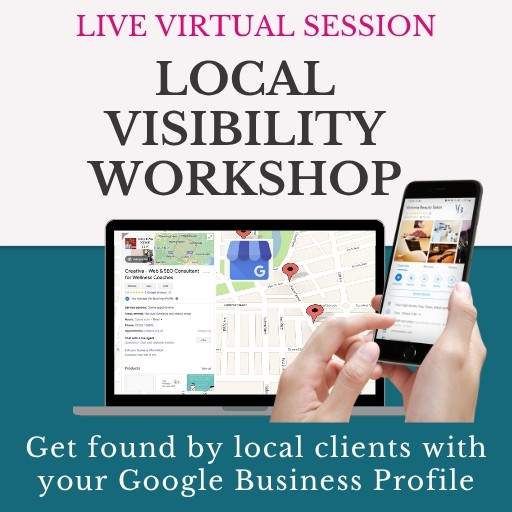
Local Visibility Workshop
Maximise Your Google Business Profile
Learn how to make the most of this essential local business tool so you can leapfrog the competition and gain valuable new clients!
Want more clients without the social media grind?
Join my free newsletter for simple website & SEO tips that help you get found.

Get more traffic & sales through your website without social media!
CONNECT

© Copyright 2026 Built with FEA Create * | designed and developed by thewebsitesuccesshub.com
Based in Marston Moretaine, Bedfordshire - helping women in business worldwide