Tired of the social media treadmill? Download the free local visibility checklist ➔

Can Podcasting Grow a Local Business
By Jules White | Published 11th September 2026 | reading time: 5 minutes
🎙️Listen to this epsiode🎙️
"90% of my paying clients find me from my podcast."
Could podcasting really bring new clients into a local business, without you having to live on social media? It is a question I hear a lot, and it is exactly what I sat down to explore in this episode with a very special guest.
Adam Schaeuble runs Podcasting Business School, and he helps people grow their business through an audio only podcast rather than by feeding the algorithm. He is also the reason I am still podcasting today, so having him on the show was a real full circle moment for me. What I loved about this conversation is that it is not just for people who already have a podcast. It is for any local or service business owner wondering whether this is worth their time at all.
We got into why a podcast can work for almost any local business, why podcast search works so differently from website search, and how your show can strengthen your website too. If you have been slogging away on social media and wondering whether there is another way, this one is for you.
Key Takeaways:
A podcast can work for almost any local business:
Adam has helped estate agents, chiropractors, vets and doctors use a show to get found and win clients in their own area, not just fitness businesses like his.
Podcast search is its own thing:
Podcast SEO lives in the search bar of Apple and Spotify, so the words you use in your show name and episode titles matter more than most people realise.
Your podcast strengthens your website too:
Having my show out across the internet has helped build my own website authority, so the two work together rather than competing.
Most people quit far too soon:
Adam says the first hundred episodes are really just practice, and the businesses that stick with it are usually the ones that see the rewards.
Build on what you own:
When Adam lost his Threads account overnight, it reminded us both why your podcast and your email list matter so much more than rented platforms.
Why a podcast works for local businesses
One of the first things I wanted to ask Adam was whether podcasting only really works for online businesses, or whether it can help the smaller, location based businesses too. So many of my listeners are local businesses, and a lot of them are slogging away on social media wondering if there is a better way to be found.
His answer was a firm yes for almost any industry. He has consulted with vets, doctors, chiropractors and estate agents, and he pointed out that this space has barely been tapped by local businesses. His example stuck with me. If he were an estate agent in his home city, he would launch a show with the name of the town in the title, interview local people, and share tips about the area and the market. That show becomes something like an audio course on moving to the city, and it builds his expert positioning at the same time. When someone new to the area needs an agent, guess who they already feel they know.
He even had a chiropractor client in Pittsburgh whose show was found by people searching for health tips, who then booked in precisely because he was local to them. This is the part that lights me up, because local visibility is what I am most passionate about. Even if you can work with people anywhere, there is no sense in ignoring the people right on your doorstep, and it is exactly the sort of thing I love helping people with in one to one work on their local SEO.
"Content we own that no one can take away from us."
How podcast SEO is different to website SEO
My world is website SEO, so I found this part fascinating. As Adam explained, podcast SEO is a different animal. The only thing you are really concerned with is the search bar of Apple and Spotify, and people search there differently than they do on Google or YouTube. They do not type full questions. They type the goal or the topic, things like podcast growth or podcast monetization.
That means your keywords need to sit in a few important places, and the biggest one is the name of your show. Adam ran a challenge inside his community recently where people simply added keywords to their show name, and some saw their downloads multiply. He has strict rules for naming a show, and the short version is that it should be strategic rather than cute. When you read it, you should know exactly who it is for and what it is about, and it should lead with a keyword.
What struck me is how closely this mirrors website SEO. On a website, the words your clients actually search for often go missing, usually because they do not sound like how we would describe ourselves. But if that is how people search, that is what needs to be in those important places. Google, like Apple and Spotify, can only put you in front of the right people if you tell it plainly what you do. It is the same principle I come back to again and again, and it is at the heart of why I believe social media is optional.
- You can tell exactly who the show is for.
- You can tell exactly what the show is about.
- It leads with a keyword, ideally as the very first word.
- If your first instinct is that it is cute, catchy or funny, it probably needs changing.
How your podcast helps your website too
This is the crossover I care about most, and it is something I have felt in my own business. My podcast being out across the internet has been a real help to my website authority. Every episode is another piece of my content showing up in different places, and that all feeds back into how my own site performs in search.
Adam described it as building an SEO superpower across the board, and I think that is a lovely way to put it. Your show and your website are not two separate things fighting for your attention. They support each other. The podcast gives you presence and reach, and that reach helps the site that ultimately does the selling. If you want to go deeper on the website side of that, it is exactly what we work through together inside The Website Growth Club.
Why most people give up too soon
If there is one thing that could hold a local business back from all of this, it is quitting before it has had a chance to work. Adam shared some sobering numbers. A large share of podcasts never make it past their first handful of episodes, and only a small fraction reach a hundred. Yet almost all of his own downloads came after episode one hundred. As he put it, the first hundred episodes are really just practice.
His advice is to start before you feel ready. Not ready, aim, fire, but ready, fire, aim. You do not need a studio, fancy kit or a team to begin. You get better at speaking by doing it, and the small stumbles and human moments are part of the charm. As I said to him, those imperfections are exactly what show your listeners that you are a real person and not a script. That is the same reason people arrive on my discovery calls already feeling like they know me. If getting started without the social media treadmill is where you are, I have shared plenty about how I get clients without social media that sits nicely alongside this.
Build on what you own, not rented land
The moment in our chat that really drove the point home was Adam's Threads story. He had built up a real presence there, and then his account was shut down overnight by an automated system, with no human he could reach to put it right. He only got it back by emailing his own list and asking people to help.
It changed how he thinks about everything. Social platforms are rented land. Your email list and your podcast are yours. He can download his list any time and start again wherever he likes, and nobody can take his show away from him. I feel exactly the same. My podcast is hosted in a way that lets me pick it up and move it if I ever needed to, and that ownership is a huge part of why I love this way of working. Add to that the fact that a podcast lands with total reliability, straight onto a follower's phone with no algorithm in the way, and you can see why Adam now gets the vast majority of his clients from his show.
Notable Quotes:
"The point is getting clients, not being cool."
"If step one of your podcast process is get famous, we're in trouble."
"My show, nobody's taking my show away from me. Nobody."
Episode at a Glance:
- 00:00 Intro and welcome
- 01:54 Adam's podcasting journey
- 08:04 Podcasting for local businesses
- 10:59 Podcast SEO strategy
- 17:44 Tips for getting started
- 24:56 Social media and the Threads shutdown
- 32:20 Podcasting as discovery and nurturing
- 34:23 How to connect with Adam
Links to Resources Mentioned:
- 🔗 Adam's show, Podcasting Business School — where Adam teaches people to grow through an audio only podcast
- 🔗 Adam's annual SEO Manifesto episode — his once a year masterclass on podcast SEO, and the best place he suggests starting (Episode 608)
- 🔗 Adam's free Podcasting Business School community on Skool — the community I joined, where Adam is active and answering questions himself
- 🔗 the live coaching episode where Adam coached me on his show — a great listen if you want to hear his approach in action
- 🔗 Why I believe social media is optional — the thinking behind everything I teach
- 🔗 How I grow my business without social media — the episode where I share exactly how I do it
- 🔗 One to one SEO and website consulting with me — if you would like help with your own local visibility
- 🚀 The Website Growth Club — my membership for established business owners who want their website to bring in clients without relying on social media
Build a business where social media is optional
Inside The Website Growth Club, we help established business owners get found online through their website, without posting every day.
Find Out More∧ Transcript
Intro and welcome
Jules: Hi, it's Jules here. Welcome back to the Website Success Show, where I teach local business owners simple strategies to help you get more traffic and make more sales through your existing website, so you can escape social media overwhelm and instead focus on doing what you love. Today I am very excited to welcome a special guest who I have learned so much from. Welcome, Adam, from Podcasting Business School.
Adam: I am excited to be here. It is always an honour to share a stage with a fellow pod pal, as I refer to my fellow podcasters. I am excited to talk all things podcasting SEO, let's help your people get some clients.
Jules: I am very excited about this, because there is so much potential here to help people grow without social media. So before we start, introduce yourself and let everybody know what you do and how you help people.
Adam: I am a full time podcaster and the host of Podcasting Business School. My main goal is to help people leverage an audio only podcast to increase their reach, get more clients and build expert positioning, and rely a little less on social media, like you do. I am passionate about it because I struggled early on when I started podcasting in 2015. I really struggled for the first three years, did not make any money and did not grow much, and then I started to figure things out. So the whole point of what I do now is to help other podcasters hit the fast forward button, because the attrition rate in podcasting is huge. A lot of people launch podcasts, but not a lot of people podcast consistently.
Adam's podcasting journey
Jules: So how did you first get started with podcasting?
Adam: I owned a fitness studio. I was involved in fitness straight out of college in 2003 and was doing really well with it, and I wanted to increase my impact and explore the online space. I was a fan of podcasts, so in 2015 I launched a weight loss based show. I did not have much success with monetization or growth at first, but I started to hear from people who liked the show and were getting results. Someone from across the pond emailed me to say they had listened to twelve episodes and started to lose weight, and I realised I had never met that person or brought them into my gym. Eventually I figured out how to monetize with memberships, paid challenges and consulting, and that evolved into what I do now with Podcasting Business School.
Jules: Is it just podcasting now, or are you still in the fitness industry?
Adam: I had the health podcast from 2015 through 2021. I sold my fitness facility in 2019 and the online health brand in 2021. So since 2021 it has been full time consulting and helping podcasters grow and monetize.
Jules: Tell us more about how you help podcasters, because you have massively helped me. I probably would not have carried on when I first started. I was very lucky that I found you not long after I got the idea to go into podcasting.
Adam: I try to help podcasters no matter what stage they are in. If I can find somebody in their first hundred episodes, I feel like I can help them a lot. The scary stat is that eighty three percent do not make it to episode ten, and only five percent get to a hundred. But almost all of my nearly 1.3 million downloads came after episode one hundred. It is like the meme of the person digging for diamonds who stops an inch away and goes home. I was not the best podcaster when I started. I had no social media presence, no email list and no website. I had to learn all of it. And most people see a famous person start a show and think that is the model, but if step one of your podcast process is get famous, we are in trouble, because that is not how it works.
Jules: I was talking to someone in a local business accelerator who was waiting to start her podcast until the accelerator's studio was built. I said, no, just get it done. If you need a studio to do it, you are probably not going to carry on.
Adam: Exactly. People put up so many obstacles, worrying about the mic, the lighting, editors, teams, and scaling offers they do not have yet. A lot of podcasters overthink it and quit too early. I preach simple tactics. If you want clients, do solo episodes, show your expertise, get your podcast SEO right, and attract the right people. My health podcast actually helped grow my local fitness business. It gave me expert positioning and an extra touch point with clients, and people started walking through the door saying they found me because of the podcast. Most podcasters do not stick with it because they do not see the return, and honestly that is because they are using the wrong strategy.
Podcasting for local businesses
Jules: That is really good to hear, because a lot of my listeners are location based businesses slogging away on social media. Do you think podcasting applies beyond fitness, to most or all industries?
Adam: A hundred percent, and it has barely been tapped by local businesses. I have consulted with vets, doctors, chiropractors and estate agents. If you are a real estate agent and you do not have your own podcast, you are leaving so much money on the table. Doing audio is far easier than video. If I were an estate agent in St. Louis, I would launch a show with the name of the town in the title, because that is how podcast SEO works. I would interview local people and share tips about the market, which builds expert positioning. It is like an audio course on moving to my city, and when someone new needs an agent, they already feel they know me. There are local sponsorship opportunities too. I had a chiropractor client in Pittsburgh whose show was found by people searching health tips, who then booked him because he was local to them.
Jules: Local SEO in particular is what I am really passionate about. Even if you can work with anyone anywhere, we should not ignore the people in our local area.
Podcast SEO strategy
Jules: Let's talk about podcast SEO. I am in your community on Skool, and after your recent SEO challenge I changed my show name slightly and the artwork, and I have noticed more downloads since. My show is set up for SEO and I am nearly at twenty thousand downloads without ever promoting it on social media or paying for ads.
Adam: The main clarification is that your expertise is web based SEO, and podcast audio SEO only concerns the search bar of Apple and Spotify. People search differently there. They do not type a question, they type the goal, like podcast monetization or podcast growth. So you leverage keywords in a few important places, the biggest being the name of your show. In the challenge, people simply added keywords to their show name and some multiplied their downloads. I have strict naming rules. It should be strategic, not cute. When you read it, you should know who it is for and what it is about, and it should lead with a keyword. A couple of years ago I searched tax savings tips, saw a show called Tax Savings for Small Businesses, listened to about ten episodes and spent around four thousand dollars with that accountant. So it works.
Jules: That mirrors website SEO, where the keywords people actually search are often missing. It is all about telling Google what we do. And my podcast has massively helped my website SEO too. My show being out across the internet helps my own website authority.
Adam: Yes, you are developing an SEO superpower across the board. People say keywords sound boring. Do you get that with websites?
Jules: All the time. It is that thing of, well, that is not how I would describe myself. But if that is how your clients search, that is what needs to be in the important places on your pages and your podcast. Google does not know where to put you otherwise. You can still use the more emotive language too, but give yourself the best chance of showing up.
Tips for getting started
Jules: If someone likes the sound of podcasting, have you got any tips before they dive in?
Adam: We have all heard ready, aim, fire. Podcasting is ready, fire, aim. Get the basics, start recording, then adjust. I tell people their first hundred episodes are kind of practice. It is a long tail thing. You need the reps to find your voice and learn what your audience wants from you. A lot of people have never spoken on a microphone. I am a lot better after nearly fourteen hundred episodes than I was eleven years ago.
Jules: But that is okay, because it shows we are not AI. I remember the first episode of yours I listened to, walking round the supermarket on a Saturday evening, thinking this guy really knows his stuff. Then I shared your show with a client and you sent me a DM to say thank you. That was my introduction to your world.
Adam: That means a lot. I encourage people to start simple. I strive for simplicity and do things differently. No intro or outro music, no ads, mostly solo episodes. I record in my basement in thirty minutes and edit in five or six. That leaves me time to actually connect with people, like answering three hundred questions during that SEO challenge myself. I am not trying to be everywhere. Connection matters more to me than promotion.
Jules: And that works because your SEO is dialled in, so people find you through search.
Adam: Yes, people find my show while I sleep, every single day. At some point you do have to put out good content, but speaking ability is fixable. One of my friends started out asking guests, so what do you want to talk about, and now he interviews big names with millions of downloads. That is the evolution.
Jules: We cannot judge our day one against someone else's day one hundred, especially online where the message is that if you are not scaling, you are failing.
Social media and the Threads shutdown
Adam: That bothers me too. I posted on Threads that it drives me crazy when podcasters think all they need is a catchy name and good interviews to grow. Two people disagreed, one with over a million followers and one with three hundred thousand. I said, that is why your show has a following. Most podcasters start with far fewer than a thousand followers, if any.
Jules: I had zero. Let's talk about what can happen if you rely on social media, because I have used your Threads story as an example before.
Adam: My philosophy is that if I am on a platform, I need to see a return. I want a focus platform, the minimum effective dose. Threads checked all the boxes for me, and then, near my one year anniversary, it shut down my account. An automated system flagged me, ironically, as a bot. I sent in a photo of my driver's licence to prove I was human, and it banned me anyway, with no human to reach. The only thing that worked was emailing my list of four thousand podcasters and asking them to complain and tag the right people. Within twelve hours my account came back. It made me realise the importance of two things, SEO and my email list.
Jules: Having your email list to contact people directly is so important. Even if you had never got Threads back, you would still have been able to reach people. You would not have lost your business.
Adam: It changed my perspective. Social platforms are rented land. Even my community could be taken away, but my email list I can download and keep offline and restart anywhere, and nobody can take my show away from me.
Jules: That is why I love podcasting too. Mine is hosted on Buzzsprout, and if that went away tomorrow I could download it and move it. Content we own that no one can take away from us.
Adam: And a podcast has a hundred percent deliverability. If someone follows my show, it lands on their phone every time, with no spam filter and no algorithm. People want the thing, and they get the thing.
Podcasting as discovery and nurturing
Jules: The big thing for me is that people arrive on discovery calls saying they feel like they know me, because I have been in their ear. I felt that about you. And I think the humanness is part of it, the stumbles and laughing at yourself.
Adam: A lot of people see podcasting as just nurturing, but it is discovery and nurturing. Ninety percent of my paying clients find me from my podcast. Big names in the content space are not even leveraging SEO. I have started helping large shows that have ridden their fame, and when they add SEO it takes off. I bring normal people's growth techniques to them.
Jules: I see the same on big websites, all funnels and zero SEO. Such a missed opportunity.
Adam: Someone famous can put their face on a show and it hits number one. Most of us cannot do that, so we leverage the tools we do have.
Jules: And we do what is appropriate for our business.
How to connect with Adam
Adam: A great next step for your audience, since we have talked a lot about SEO, is my annual SEO manifesto episode, episode six hundred and eight of Podcasting Business School. That is my masterclass and where I would start. From there, come and join my free Skool community, where Jules is, and where I am active and answering questions myself. It is for people who want to take action and get real help.
Jules: It is a lovely, real community. From a comment I left on someone's post in there, I have a podcast guest appearance booked in. I will link to your show, the community and the coaching style episode you did for me, which I love doing. I would not have those coaching episodes if I had not listened to your show and taken your advice.
Adam: It is a secret weapon. Bring your listeners onto your show and coach them as if they are paying you. You are doing great things here, Jules. And if you are listening, please leave a five star rating and review for Jules.
Jules: I love that. Thank you so much for listening, thanks Adam for being here, and we will catch you next time.
Join like-minded business owners growing without constant reliance on social media or burning out from posting.
Join the Community
Download The Local Google Visibility Checklist & Get Fully Booked Without Social Media
Free Download
Discover Your Core Topics: The Roadmap to Website Success
Free Download
Jules White is a Website & SEO Marketing Consultant and Founder of The Website Success Hub.
She helps female business owners & entrepreneurs grow without social media - teaching them how to show up on Google, get recommended in AI search, and turn their website into their hardest working team member. So more of the right people find them, book with them, and buy from them - with intention, not constant hustle.
Read more on the blog

Are you spending hours posting on social media - yet still not getting the clients or sales you want...
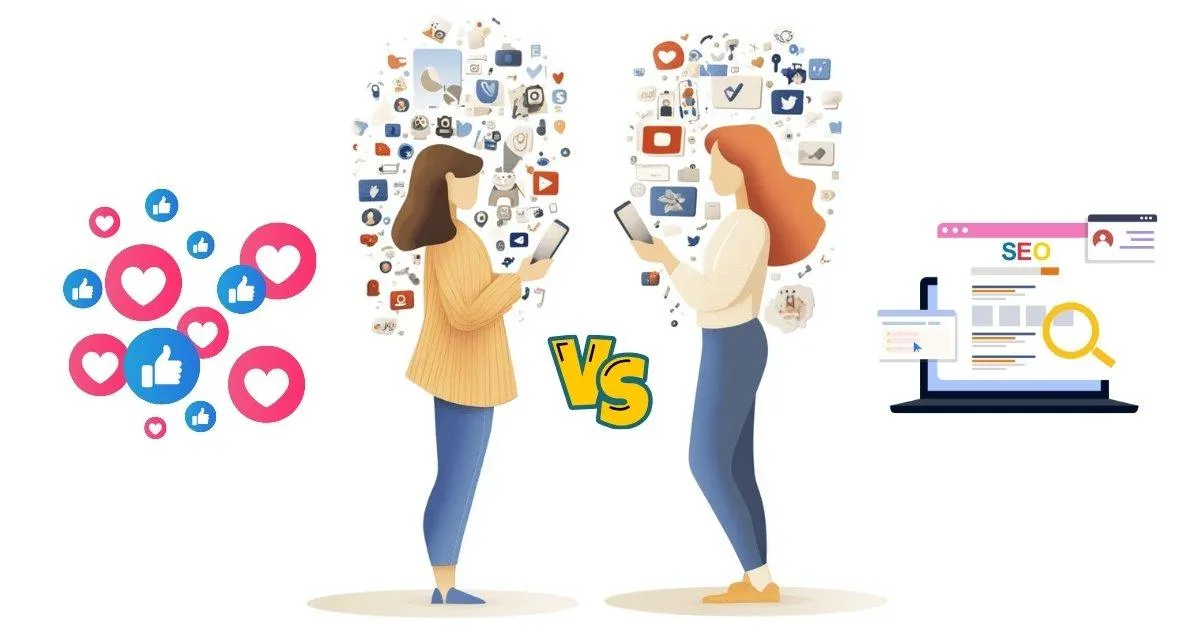
Social media vs SEO: 5 myths that could be hurting your business! Discover the truth about website traffic & sustainable marketing...

If you're looking for alternative ways to market your business, I thought I'd go through my top three...
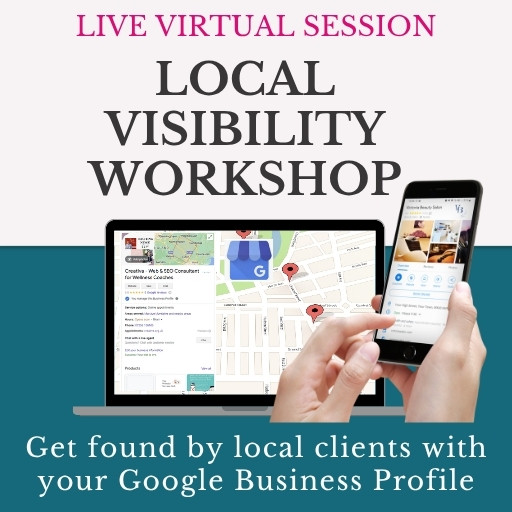
Local Visibility Workshop
Maximise Your Google Business Profile
Learn how to make the most of this essential local business tool so you can leapfrog the competition and gain valuable new clients!
My recommended platform

* this page contains affiliate links - if you decide to purchase FEA Create I may earn commission, the price you pay remains the same. I only recommend software & services I believe in and use in my own, or my clients businesses.
Want more clients without the social media grind?
Join my free newsletter for simple website & SEO tips that help you get found.

Get more traffic & sales through your website without social media!
CONNECT
© Copyright 2026 Built with FEA Create * | designed and developed by thewebsitesuccesshub.com
Based in Marston Moretaine, Bedfordshire - helping women in business worldwide