
Why Google Can’t Find Your Page: SEO for Practitioners
By Jules White | Published 4th November 2026 | reading time: 12 minutes
🎙️Listen to this epsiode🎙️
"So that page actually isn't indexed in Google... that would definitely be part of the reason why you're not getting any traffic."
What would you do if you'd written a page for a service you really care about, and it never brought in a single enquiry? That's exactly where Sam Jones found herself with her birth trauma therapy for dads page. Sam is a fertility and pregnancy specialist, a registered midwife and licensed acupuncturist based in Wales, and a member of my Website Growth Club.
In this live coaching session, we looked at why that one page wasn't working, and found out that Google didn't even know it was there.
If you're a health practitioner or run a service-based business, and you've got a page that seems to be invisible, these are the three things I'd check, in this order.
Key Takeaways:
Check Google can find the page first:
Sam's page wasn't in her sitemap and hadn't been indexed, which was part of the reason it wasn't getting any traffic.
Decide what the page is about:
Testing words like "support" and "therapy" in Google and your Google Business Profile gives the page a clear direction.
Say it clearly in your page title and H1:
Using the same clear phrase in both sends a really strong signal to Google about what that page is for.
How Sam gets clients without social media
Sam doesn't use social media. As she told me, it's not that she's forgotten to post, she just doesn't do it. And that's absolutely fine, because social media is optional.
Her website and Google Business Profile have been doing the work instead. She's been working on them since around June, alongside seeing clients. Then she went on holiday, and when she came back she had five or six booked-in calls waiting, plus lots of emails from people considering working with her. They all decided to work with her.
That's the goal with all of this: you can be sat on the beach and still have client enquiries coming in. If you'd like to see how this works in my own business, I share it in how I get clients without social media.
Start with one page
It's easy to look at your whole website and end up with a great big, long to-do list. I would always say focus on one page first. That might be your most profitable service, the one you enjoy doing the most, or the one you'd choose if you could only pick one thing.
Sam's fertility work has been bringing in most of her enquiries, but her other services weren't getting the same numbers. She chose the most challenging one to focus on: birth trauma therapy for dads. As Sam explained, when things happen to women, they get offered debriefs and other support, but there's nothing for men or partners.
Step 1: Check Google can find your page
When Sam and I had a 1:1 consulting session earlier, one of the actions was to update her sitemap. That one had dropped off the radar.
Keeping your sitemap up to date is a really important way to tell Google, "These are the important pages of my website." It helps Google crawl through those pages better, and faster. In GoHighLevel, new pages aren't added automatically. You have to tell it to include them and then create a new sitemap. It takes two seconds, but it's easy to forget.
Google was showing about 77 pages of Sam's site in its index, but her page for dads wasn't in her sitemap. When I typed site: followed by her website address into Google, the page wasn't on page one or page two of the results. It hadn't been indexed, and that would definitely be part of the reason it wasn't getting any traffic.
How to check whether Google can find your page
- Visit yourwebsite.com/sitemap.xml and check the page is listed. If you can't find your sitemap, Google the name of your website platform and ask how to find it.
- Type site:yourwebsite.com into Google to see which of your pages Google has in its index.
- In Google Search Console, use the "Inspect any URL" bar to check whether that specific page has been indexed.
- In Search Console, go to Sitemaps, check when Google last read yours, and paste your sitemap address in again. This can sometimes prompt Google to crawl it.
If you're new to Search Console, my beginner's guide to using Google Search Console to improve your SEO walks you through the basics.
Step 2: Decide what your page is about
Sam's page was set up as birth trauma support for dads and partners. When I asked who it's really for, she said it's specifically for dads, because there's not a lot out there for them.
Then I asked what "support" actually means. Sam takes dads through an assessment to see how much the birth has affected them, including up to PTSD. She then offers treatment, which is a talking therapy based in NLP. So I suggested she think about whether "therapy" is a better word than "support".
I'm not saying she should choose one or the other, but there are two good ways to test it:
- Google both phrases, "birth trauma support for dads" and "birth trauma therapy for dads", and see whether there are plenty of results and whether they're the right sort of thing.
- Look at Google Business Profile categories and services to see what Google already understands about what you do. The free GMB Everywhere plugin is a great way to see this.
Once you've decided, that phrase guides everything else on the page.
Step 3: Say it clearly in your title and headings
Whatever phrase you decide on, I'd use it in both your page title and your H1 heading. For example, "Birth trauma therapy for dads in Wales", or your specific area or town. That sends a really strong signal to Google about what the page is about.
In GoHighLevel, your page title and description live in each individual page, in the SEO Meta Data box at the top. To check what's there, along with your headings, I use a free Chrome extension called AIOSEO. Just make sure you're looking at the front end of your website, not the logged-in version. I also talk through page titles in another coaching session, what to do when your website feels like a hot mess.
Sam's page had more than one H1 heading, which I see a lot. Sometimes in GoHighLevel, when you copy a section, an H2 heading turns back into an H1, so it's worth checking whenever you publish a new page.
Sam also had a lovely heading, "When the birth traumatised you too". She can keep that as the large heading people notice first, and add a smaller eyebrow heading just above it marked as the H1, such as "Birth trauma therapy for dads". The H1 doesn't have to be the biggest heading, but ideally it should be the first content on the page.
A simple heading structure for a service page
- One H1, ideally the first content on the page, using your main phrase
- H2 headings that use variations of that phrase, such as "Kind words from clients about birth trauma therapy for dads"
- An FAQ section with an H2 such as "Frequently asked questions about partner birth trauma"
- Each question as an H3, with the answer as a paragraph beneath it
Using variations like "birth trauma support" and "birth trauma help" through your headings also shows you're not just keyword stuffing.
The work you only have to do once
"Don't spend too long worrying about what's the right thing; put something in there, get that page in your sitemap, and get it indexed in Google."
Once that's done, you can come back and tidy up the headings. With SEO there is quite a lot of work up front, but once you've done it on your core pages, you shouldn't need to go through the whole process again. Those pages can keep bringing new clients in.
Sam said she didn't feel overwhelmed by any of it, because she'd already been through these lessons in the Website Growth Club and knew exactly where to find what she needed.
If this sounds familiar and you'd like some help with your own website, you can book a Website Potential Discovery Call with me. We'll chat about where you are, where you'd like to get to, and how I can help.
Notable Quotes:
"I would always say focus on one page first."
"Just making sure that your sitemap is up to date is a really important way to tell Google, 'These are the important pages of my website.'"
"I would use that in your page title and your H1 heading, because then that's going to send a really strong signal to Google that that's what this page is about."
"There is quite a lot of work up front. But once you've done this work on your core pages, then you shouldn't really need to come back and do too much."
Episode at a Glance:
- 00:00 Welcome & Introducing Sam
- 01:48 Progress Since Joining the Growth Club
- 04:03 Sam's Holiday Win: Client Enquiries
- 04:54 Coaching Session Goals & Six-Month Vision
- 05:53 Website Challenges: Pages, Headers & GoHighLevel
- 10:38 How Clients Are Finding Sam
- 13:08 SEO Blockers & Understanding Analytics
- 14:12 Focusing on Birth Trauma Support for Dads
- 16:43 Site Map & Google Indexing Issues
- 18:58 On-Page SEO: Titles, Headings & Structure
- 27:13 Action Plan & Wrap-Up
Links to Resources Mentioned:
- 🎧 Listen to this coaching episode with Sam - the full episode on my podcast player
- 🔗 Natural Fertility and Pregnancy - Sam's website, for fertility, pregnancy and postnatal support in Wales
- 🔗 AIOSEO Chrome extension - the free tool I use to check page titles, descriptions and headings
- 🔗 GMB Everywhere plugin - the plugin I recommend for seeing which categories Google associates with a Business Profile
- 🔗 My beginner's guide to Google Search Console - how to use Search Console to improve your SEO
- 🔗 Book a Website Potential Discovery Call - a chat about where you are with your website and how I can help
- 🚀 The Website Growth Club - my membership for established business owners who want their website to bring in clients without relying on social media
Build a business where social media is optional
Inside The Website Growth Club, we help established business owners get found online through their website, without posting every day.
Find Out More∧ Transcript
Welcome & Introducing Sam
Jules White: So, hi, welcome back to the Website Success Show. It's Jules here, and today I'm joined by Samantha Jones from Natural Fertility and Pregnancy.
Today we're going to do a coaching session together. So, hi Sam, it's great to have you here.
Sam Jones: Hi Jules. It's great to be here.
Jules White: Oh, um, before we start, I would love you to introduce yourself and let us know a little bit about what you do and who you help.
Sam Jones: Yeah, okay. So I am Samantha Jones, and I am based in the UK, uh, in Wales specifically.
And I have created an integrative, um, clinic where I help women with fertility problems, um, so getting pregnant as well as staying pregnant. I work with them through pregnancy with all of the issues that they have, and then afterwards things like scar and birth trauma.
So as a registered midwife and a fully licensed acupuncturist, I kind of have where Eastern medicine meets Western medicine. And it's a great combination, and I get some really good results.
Progress Since Joining the Growth Club
Jules White: Fantastic, that sounds amazing. So you've been a Website Growth Club member for a while, Sam, and it's so lovely having you in there.
So what have you kind of been working on and what's changed since you joined the Growth Club, do you think?
Sam Jones: Okay, so since I joined, wow. So I have been trying to put together my website, which I shared with somebody and they said how professional it was, and I don't really have any skills in this area.
So that has been really phenomenal. And I think, like we were just having a chat about, it's like the traffic and things now from doing your course in the Growth Club and having the support like on the Q&As and understanding how we need to implement things, um, the Google profile is definitely a game changer, pointing everything in the right direction.
And I know I, I can't attend the calls, but what I have found is that it's given me the motivation to go back, look over what's been said, and how I'm applying it to my own things. So I've been really grateful for that and, and I can see there's definitely a shift and I've got more and more clients coming through.
Jules White: Yeah. Yeah, I mean we, we were just talking about the fact that there's not always time to do everything that you feel like you need to do, and you sort of said, you know, you feel like you've not done as much as you'd like to, which I think is really common and, and there's always more you can do.
But I think even just hearing how much progress you've been making in terms of the results that are coming in and definitely for your kind of business, Google Business Profile, I just think is so powerful for that. Um, and you shared a win in the group, actually.
Wait, because you were on holiday and you shared a win that you had, yeah, which I thought was really fantastic. So tell us a little bit about that win.
Sam's Holiday Win: Client Enquiries
Sam Jones: Um, so the win was that we had after the work that I had, because I think, I think I've been doing this work since probably June, but I've been working alongside this, so I've been seeing clients. So it, it has been a work in progress.
And what I do like about, um, your style actually, Jules, is that, that you take away the pressure. Like there's no, like if, if you haven't done it, it's okay to like not have done it, um, so long as you've kind of still got that momentum and are still doing something.
So, the work that I've been doing since then. I went away, and when I came back I had, so I think, I think it was about five or six booked-in calls with me.
Um, I had so many people emailing me about different things that they were considering. So I came back, and I, I had work that I could literally hit the ground running with.
And they, they all decided to work with me. So I, I, not only is it getting the, the right people, um, but it, it's also bringing that level of numbers through, so yeah, it's been brilliant.
Jules White: That's so, that's so good. And I, I mean that's the goal with all of this, and I think that's the thing with feeling like, oh, I'm not doing enough.
You're building your website as a long-term, and, and the SEO is a long-term strategy to bring those clients in. So it's really great to hear that it's happened so fast for you, but also that's the goal, that you're sat on the beach and you've got client enquiries coming in, really, so I'm really pleased to, to hear that.
Coaching Session Goals & Six-Month Vision
Jules White: So we're going to dive into a coaching episode today, and we'll start with kind of where you are right now, where you'd like to be, and what's getting in the way. And I'll give you some, just some recommendations of what to focus on next, I think really, because we could end up with a great big, long to-do list, but actually just having one or two things to focus on first I think is really helpful.
Yeah, so hopefully by the end of this episode, you'll have a clear next step of what you need to do, yeah. And if you are listening and you run any kind of service-based business, even if you're in a different industry, then I think you'll definitely find it helpful.
So Sam, if we were to meet in six months' time and you were telling me the amazing things happening in your business, how would your website be helping with that?
Website Challenges: Pages, Headers & GoHighLevel
Sam Jones: Um, my website would literally be, um, sort of like all of the pages would have the links. Um, and I think just, it's quite a challenge when you are trying to do the different pages at different points in time.
Um, and the, I, I try and keep the same text, but some of it doesn't look uniform, so it's kind of like I need to get, make sure that I've got, um, something somewhere written like, the text has to be this size or the headers have to be this size. I think I've gone through a lot of it.
And, and you know, one, I think one of the, the lightbulb moments I had was like when you were talking about headers, like only having the H1 at the top, which I think I've done, though you're probably going to tell me a little bit different because, um, sometimes when you're copying pages to try and do it. Um, but those kinds of things, just making sure that everything is as it should be and its functionality is, is coming through and all the links are working and everything, yeah.
Jules White: Yeah, absolutely, fantastic. Okay, so I, there's definitely, there's a module I can point you towards in the membership where you can easily check if all of your pages are set up with the headings properly, but that's probably a good point to actually say that.
I would always say focus on one page first. So focus on your most profitable product or service, or the one that you enjoy doing the most, or that you know what you feel, actually this is the, this is the one that if I had to only pick one thing, this is the one; get that page set up first, and you are using Funnel Sketchers.
So I can definitely understand where those issues can come from in terms of making sure the headers are right and everything. And there are actually some tips that you can, um, use around that.
So maybe that's something I need to share in some, in a, in some future content. Actually, I'll make a note of that, of how to keep everything uniform in there, because there are quite a few people listening who use GoHighLevel, some version of GoHighLevel, so then, um, that might be helpful as well.
Um, I mainly find just rather than adding, adding new elements in, and this probably works with any website builder, actually cloning the things that are already there and then, and then using those, sometimes that can help, yeah. And setting yourself up some page templates can help as well.
So I never just create a blank page. I'm always copying one of my existing pages and using that and changing things around, yeah.
I find that makes it a lot easier then to keep things more consistent. It's a bit annoying; it's unfortunately one of the drawbacks with GoHighLevel that, that we don't have the option to set universal fonts and font sizes and all of those kinds of things.
I think we're on the way to getting that, but right now we don't have it. We're not-
Sam Jones: there yet. Yeah, perfect.
Jules White: Yeah, but I mean, this is a really good point as well. The fact that we could end up with a site that is entirely perfect and it then looks like it either looks like it's been generated by AI or it looks like it's, um, you know, just a template site, yeah.
So I wouldn't worry too much about not everything being perfect, yes. I think it's a good idea to have those things written down and have the clear guidance for yourself almost of like, yeah, I know my H1 headings are always like 50 font or 50 pixels or whatever.
Um, yeah, it's good to have that because it just makes it easier for you to actually go through and do that yourself. But don't, all that to say, don't stress too much about it if not everything is perfect, really.
How Clients Are Finding Sam
Jules White: So how do you feel like clients are finding you at the moment? Like the majority of clients, how are they finding you?
Sam Jones: I think from, from what I've seen from, from what I've set up and from what you have shown us, looking at the sort of SEO, there is direct, though for the majority of it, it is Google. Mm-hmm, either desktop or, uh, mobile.
Um, I've seen a few things like Bing. Um, there, I have been on ChatGPT once or twice, and I was like, oh, that's interesting.
Jules White: I feel like there's so much opportunity for you around that area because these are the kind of conversations that people will be having with ChatGPT about these very personal issues that they're having. I feel like that, you know, that that's where you could potentially have a lot of traffic coming in the future, I think as well.
Sam Jones: Yeah, that would be amazing, so-
Jules White: Yeah, yeah.
Sam Jones: I think-
Jules White: I think it's-
Sam Jones: predominantly that-
Jules White: aside. So is that sort of the main way that people are finding you?
Or are you doing, like, are you doing any networking? Are you doing anything else that kind of brings people your way, or do you get referrals, do you-
Sam Jones: Yeah, so actually I don't do a lot of networking. Um, I, I don't like social media.
Um, but I, I mean, you won't find much of like my holiday and stuff on that, I just- Oh, good, it's not that I, I have forgotten to do it. I just don't do it, yeah, that's-
Jules White: fine. It's optional, that's fine.
Sam Jones: We're in the-
Jules White: right place.
Sam Jones: I do think some, some of it is referrals from people that have worked with me and have had results with me. Um, so I think there is an element of that.
Um, but I know having spoken to the people that, um, booked calls and things that about 50% of those were from direct traffic or they'd found me through a search. So, and that's definitely different.
Jules White: Yeah, that's brilliant, that's really good. Do you, so do you track where people are coming from, like how many referrals you're getting and those kinds of things?
Do you, is it kind of, do you have a rough idea or do you have a process where you actually know that yes, those people have come to me? Do you have, do you have an intake form or anything?
Sam Jones: Um, I have, they fill a form in when they, when they, when they book a focus call with me; they get a half-an-hour free focus call with me and they fill a form in just to give me some direction as to what's been going on for them, what they're looking for, um.
Jules White: Or even just something as simple as adding a box to there of, "How did you hear about me?"
Sam Jones: Ah, okay, yeah. Perfect.
Jules White: Yeah, and then that will show up. You could, uh, you could have it as options or you could just literally have it as a text thing where they put, they put in the box, you know, they write their own answer in there, yeah.
Um, but I, because I think it's really important to understand where our traffic is coming from and you know, where our, our clients are coming from ultimately. And that is definitely something that will help you then to know where to focus your attention, really, yeah.
Because if you are finding like you, you know, most people are coming from one particular traffic source, then you can then work out whether actually do I, do I just need to focus on more of that, or, you know, okay. We certainly don't want to get rid of anything that's then bringing loads of people in, you know, so.
Sam Jones: Yeah.
Jules White: Absolutely, and that's quite an easy thing to do. So you've got the form there already, and you can just add an additional, additional field in there, really, I'd suggest doing that.
SEO Blockers & Understanding Analytics
Jules White: So is there anything that kind of feels like it's getting in the way of you getting to that point where you've got those pages set up on your site? Do you feel like it's, there's anything that's like, what's the main blocker to you actually being at that point where that's done and you've-
Sam Jones: Um, I think I'm, I'm just not sure whether or not it, it's like when I'm looking at things like the, the, um, SEO work and things, I'm not really sure if the two things are married together.
Jules White: Okay.
Sam Jones: Um, because I don't, I don't really understand the SEO stuff, but I know the SEO stuff sits in the background because we've put the, um, we've put the link on the website to see where the traffic is coming from and things.
Jules White: Yeah.
Sam Jones: So I'm just, I'm just curious as to whether or not those, that's working for like the website and the website's working for the two. So it, like the back and forth is working well.
Jules White: Okay, and you have Google Search Console set up?
Sam Jones: Yes.
Jules White: Yeah, and Google Analytics. Do you have Google Analytics set up as-
Sam Jones: well?
Jules White: Yes. So have you dived into that at all in terms of looking at where your, where the, like where your traffic is coming from? And-
Sam Jones: I have, but I don't really, really understand it if I'm honest.
Jules White: Okay, so that might be something if we, um, what you could potentially do, we could look at, we could dive into that on one of the Q&A calls. Actually, even if you can't make it live, potentially what you could do is share your Analytics account with me and I can just literally go in and have a little look and try and explain what's going on with it.
And that might actually be something that's helpful to other members as well for me to just use you as an example of, yeah, of what's happening, yeah. So we can definitely do that, though it's probably, that's probably something more of a, something I would do within the membership because it's a bit more enclosed and obviously your information, the back end of your Analytics and everything.
Um, so in terms of then applying that, so if you were then thinking about okay, going into those pages and, and understanding what you need to change. Do you feel confident about that; probably what I'm trying to say is do you feel confident about the changes you've already made to the pages you've worked on?
Sam Jones: Um, I do. And I think, I think for my fertility work, because predominantly that's what's come through, okay, that's been brilliant.
Jules White: Yeah.
Sam Jones: But I'm just wondering whether my pregnancy and my, my postnatal, my trauma stuff-
Jules White: Mm-hmm.
Sam Jones: Whether that is talking to necessarily the right clients. Because there doesn't seem to be a lot, though a couple of those things have been looked at, um, especially like scar, scar therapy.
Um, but they don't seem to have the same numbers as the, the fertility stuff. Now, whether that's just because, because I think predominantly, if I'm honest, I think that my Google profile is set up more for, for the, for fertility stuff, and I think I did that in the very beginning because that's where I kind of started with the website.
Jules White: Yes.
Sam Jones: Um, so it's probably just making sure that I am not missing something with that.
Focusing on Birth Trauma Support for Dads
Jules White: Okay, okay, okay. So out of those things, the, the pregnancy, the trauma, or the scar therapy, which one of those, like if we were focusing on one of those things for you, which one of those is the most important?
Which one of those is, you know, is everything the same in terms of like profitability and the time it takes for you to do it? Is it all, is that all the same and it's just literally connecting with different people or-
Sam Jones: Yeah, probably. They're all, yeah, they're all the same, yeah.
Jules White: Okay, so which, which one of those shall we focus on?
Sam Jones: Um, let's go for the most challenging, shall we? Um, so I think this is, I'm, I'm trying to reach, um, men and partners who've had trauma.
I see, um, because they don't talk about it a great deal.
Jules White: I-
Sam Jones: saw that-
Jules White: actually. Yeah, yeah.
Sam Jones: I saw that. Yeah, there are no services for men; when things happen to women, they get offered like debriefs and different things, but there's nothing for men or partners.
Jules White: Okay, that's a good thing to dive into. Let's have a little look at that then, and I'm going to share my screen so we can have a look at your site.
But yeah, I was having a little look at your site before we came on and I saw that you offer that service, and I definitely thought that there's probably some potential around that. Have you done any help, uh, any work yourself on checking whether there are keywords around that or anything?
Have you done any sort of keyword research or have you, like, have you done anything around that?
Sam Jones: No, not really, only kind of what people have been searching for.
Site Map & Google Indexing Issues
Jules White: Yeah, and do you, are you seeing in your Google Search Console, are you seeing any of those terms come up under the queries, or is that not really, that's not really happening for you? Yeah, there was one thing actually that I saw, um, because we had a one-to-one session as well, and I think there was one action on that that potentially has dropped off the radar, which was actually getting your sitemap updated.
So that's something I can show you how to do on a, on- We've got a Q&A call in the membership later on today.
I can do a little demo of how to do that, as I've got that on the list actually, okay. But it's something that, just making sure that your sitemap is up to date is a really important way to tell Google, "These are the important pages of my website," to help Google to crawl through those pages better as well and help Google to crawl through them faster.
So the way that, if you are listening, the way that you can actually check this yourself for your own site is go to your website, um, go to your domain, and most sitemaps are yourwebsite.com/sitemap.xml. That's where most websites will find that, and it'll either be that or it will then direct or redirect to something.
If you can't find it for your site, then you can Google whichever website platform you've built in and ask how to find the sitemap. But normally it's quite, quite, um, easy to do within GoHighLevel.
One of the issues that we have is that we have to update when we add, when we add website pages and add new website pages, we have to tell GoHighLevel to put those in the sitemap and then create a new sitemap. It takes two seconds to do and it's annoying that it doesn't do it for you or prompt you when you create a new page, "Do you want to add this one to the sitemap?" - but it doesn't for some reason.
So when I'm looking at these pages, and this is all Google will, like Google has ranked other pages of your site. I think when I looked, there are about 77 pages that Google is showing in the front end in terms of what it's indexed, okay.
But in terms of your sitemap, this is all that's on there. So there's not the page on there of - where was the one I saw? - so here, birth trauma for partners.
Sam Jones: Yeah.
Jules White: This page isn't there in your sitemap, I don't think. Let me come back to the sitemap; it's not there, no, it's not, no.
So that would be, if we are focused purely on that page, that would be one of the first things I would do, okay. And then I would go into your Google Search Console and go to the place where it says "Sitemaps," and there are instructions on how to do this in the Google Analytics course that is in the membership.
So you'll find that in there of how to do it. Um, it's very easy, and you will see one of the site navigation menus within your Google Search Console says "Sitemaps," okay.
Just go in and see when it last reread your sitemap and then it, it might be worth just copying and pasting that sitemap address in there again. And then that sometimes forces Google to then crawl through the sitemap.
Sam Jones: Right.
Jules White: The other thing you can do is within Google Search Console, there's a little "Inspect any URL" of your website, where you can type the URL of this particular page that you're trying to get to rank, the, um, birth trauma for partners. Um, where did that go?
Birth trauma support for women, for dads and partners, this one. Um, so just copy and paste that and just check that Google has actually indexed that page, okay.
Um, it may have done already because you, as I say, you had 77 pages that Google was showing, so we can actually have a little look. So this is where I just went to Google and typed in site: and then your website address.
And then it shows me, um, about 77 results. And it shows me basically the pages that Google has got in its index.
Sam Jones: Okay.
Jules White: So we can just have a little look, and it's certainly not there in terms of the first ones that, that it's, that Google is showing. Let's have a look on page two - no, so that page actually isn't indexed in Google, okay.
So that would definitely be part of the reason why you're not getting any traffic, because Google doesn't, it hasn't actually added that page, yeah. Okay, so that's definitely the first action: go and put that in the sitemap.
Sam Jones: Yeah.
On-Page SEO: Titles, Headings & Structure
Jules White: Let's have a little look at that page and see if there's anything else major that you can do with that page. So I'm using my little Google Chrome plugin called AIOSEO, All in One SEO Analyser.
This is a free tool from, um, that you can just get from the Chrome Web Store and it immediately shows you your page title, your page description, and what headings you've got on that page, okay. So this is definitely something you can pop in and quite easily update this, so we've got the page title and-
Sam Jones: That's the back end, isn't it?
Jules White: Yes, yeah. So in GoHighLevel, that is within this individual page.
So you'd go into this page, click on - there's a little box up at the top that says "SEO Meta Data," and there's a thing that says content, and you just literally put in there your page title and your page description. So the page title, um, something like, um, I mean this is one of the things that AI is quite good at helping with, actually generating a page title, okay.
But, um, birth - is there anything that immediately sort of springs to, to mind, "Birth trauma support for dads"? Or is it specifically dads or is it partners?
I know it would be both, it would be partners as well, but in terms of-
Sam Jones: It, it, it is really specifically for dads because I think women are very good, even if it's someone else, like looking for it, yeah. Um, and I'm going to do a separate one for, for staff anyway, but, um, yeah, absolutely, it's for dads, because there's not a lot out there.
Jules White: Okay, so I would definitely have that then as the H1 heading on this page: "Birth trauma support for dads." And I was thinking about "support," whether that's like, so what does support mean; how do you support them?
Sam Jones: So I can take them through an assessment, um, to see how much it has affected them, including, um, up to PTSD.
Jules White: Yeah.
Sam Jones: Um, and then I can offer, um, effective treatment, okay. Um, and help them get through that, and, and then they won't feel the way that they, they do anymore.
Jules White: So what kind of treatment is it? What's the, um, is it, is it a particular modality or is it, is it therapy, is it acupuncture, what do you do?
Sam Jones: Yeah, so it's a, it's a, it's a talking, like talking therapy, uh, based in NLP. Um, okay, which is, yeah, I'm, I'm a certified practitioner in that.
Jules White: So I would think about whether you then use the word "therapy" rather than, um, "support."
Sam Jones: Okay.
Jules White: Potentially, and I'm not saying you should one way or the other. And there is a, a good way to test this actually, which is looking at your Google Business Profile, yeah.
And seeing whether, so I've recommended a few times the, um, GMB Everywhere plugin, which is a great plugin that anyone who's got a Google Business Profile can use. You can use it for free, and I think you get a certain amount of usage a month.
Um, but this is a really good way to see what things Google associates with what you do, yeah. You could even do it yourself with a, just a Google search.
So if you then just go and Google "birth trauma for dads" and just look at what's coming up, and it might even be worth Googling both. So Googling "birth trauma support for dads" or "birth trauma therapy for dads," and just see what kind of stuff is coming up.
See whether actually you are seeing plenty of search results and it's the right sort of thing that you are seeing in the search results, okay. Um, in terms of what Google then understands about it, where, where the Google Business Profile can help, is it under the, under the, um, the, the category of therapy or psychotherapy?
Um, there are lots and lots of different headings that relate to therapy. There may well be something around, there probably would be something, well, there definitely would be something around birth trauma.
And I think that was one we found when we did some work together on your Google profile, yeah. But you could also then have a little look and see if there's anything in there, any services that Google already understands that relate to what you do.
It's very specific, so there might not be, but even just adding that into your Google profile and working out whether it needs to be "support" or whether it needs to be "therapy" would really help just in terms of the direction of that particular page, okay. And then when you do that, that will then guide what you need to put in your page title and, and even the H1 heading on this page; I would be that clear that literally it would say the H1 heading is whatever you decide.
So say if you decided "Birth trauma support for dads in Wales" or in the, even in North Wales, or in the specific town that you are in, or, you know, so okay. I would, um, use that in your page title, okay, and your H1 heading, because then that's going to send a really, really strong signal to Google that that's what this page is about.
Sam Jones: Okay, perfect, thank-
Jules White: you. And then if we have a little look at the headings, I think, so this is one where you, where the, the same thing that we often see is where you've got more than one H1 heading on this page as well.
Sometimes in GoHighLevel, when you copy a section, it, it puts it, even if it was an H2, it makes it back into an H1. So it's always just worth, whenever you publish a new page, just using this AIOSEO plugin; it's so easy to use and it just immediately gives you a really quick, um, just a quick overview of what's happening, a lot easier than trying to check through everything manually in the back end.
Sam Jones: Yeah.
Jules White: But what you just need to do is make sure that you're looking at the front end of your, of your website rather than looking at the logged-in version of it, basically, okay. So just have that in another tab, yeah.
But yeah, the H1 heading is the same; it probably, you could even, it probably would be the same as your page title, or certainly very similar.
Sam Jones: Yeah.
Jules White: And you can still have this in of "When the birth traumatised you too" - you can even have that as the main thing. So it looks like that's the, the main heading, but just above it almost have what they call like an eyebrow heading here, yes.
But mark that as H1, so as far as Google's reading it, that's the H1, the one that says "Birth trauma therapy for dads," or whichever you decide. And then just have this where it actually then will capture the attention here, really.
Sam Jones: Brilliant.
Jules White: Yeah, for support.
Sam Jones: I thought the H1 had to be the bigger one of the two, I didn't-
Jules White: No, you can, you can juggle it around a little bit as well, yeah. Ideally you want that to be at the top though.
So ideally the first content on the page should really be the H1 heading, okay. But it doesn't have to be in terms of visually looking at it; it doesn't have to be that, okay, that it's that one there, really.
Sam Jones: Brilliant.
Jules White: And then maybe just thinking about the additional headings in here. So ideally what we want these headings to be is things like, um, let's have a look at any of them, as lots of them seem like they probably would, would be better as paragraph text, yeah.
So for example, if you had some testimonials from dads who'd been through this with you, yeah. Then something along the lines of "Testimonials," or not even that, "Kind words from clients about," and then whatever you decide that keyword is, whether it's therapy for dads.
Okay, like "Birth trauma therapy for dads" or something like that, okay. And sometimes how you can then weave that, that sort of focus of this page through those H2 headings, and actually that's a, a good point is that even if you decide, okay, the main focus of, of this page is not going to be "birth trauma support," it's going to be "birth trauma therapy."
You can still use "birth trauma support" and "birth trauma, um, help," and so you can use different variations of that phrase that you're trying to get this page to show up for, yeah. And actually you should, it's like, it's important to, because it shows, it shows you're not just keyword stuffing on this page really, okay.
Just thinking about that and just thinking, "How can I then use that scattered through those headings on the page as well?" Like-
Sam Jones: Okay.
Jules White: Um, even things like "How, how, how does this help?" or, you know, "Frequently asked questions about birth trauma," like "partner birth trauma" could potentially then be an H2 heading. And then what I would suggest for the frequently asked questions is then the questions themselves become an H3 heading.
So that's how you can then use that hierarchy better. And then the answer to that question would become a paragraph beneath it.
Sam Jones: Okay.
Action Plan & Wrap-Up
Jules White: So, that feels like a lot to do.
Sam Jones: Yeah.
Jules White: But a lot of this is tidying up on this page. So a lot of this thing is actually just spending a couple of hours; first of all, I would just spend, oh, actually the first thing I'd do is just put something in the title.
So don't spend too long worrying about, you know, what's the right thing; put something in there, get that page in your sitemap, and get it indexed in Google, yeah. And then you can think about, okay, yeah, I need to tidy this page up a bit more, okay.
But that bit itself, just having something in there that tells Google this page is, is going to help people who need, need your help could be really, um, really powerful, I think.
Sam Jones: That's brilliant, yeah.
Jules White: I think it's, I think it's so good, I really do. And I think there's so much potential, and I think you are a really prime example of how, like, you don't need social media for this because there are so many places that you could get out there even beyond your website and the SEO side of things, yeah.
Where you could just get out there and do one podcast interview or something and that would fill your books like, you know, without any doubt really. So yeah, it's fantastic.
Sam Jones: It's brilliant, no, it is. And it's, it's these little sort of nuances I think when, when you're focused in on the other things and it's kind of like, oh yeah, I remember we should have been doing, you know, it's like, but coming back to it, I think sometimes as well as the more that you do it, the more you embed it, it just becomes part of your natural routine, just checking like maybe once a week just to make sure everything is so, um, yeah.
Jules White: And, and the good thing about this is once you've done this work, and this is like the, this is the thing with SEO, there is quite a lot of work up front. But once you've done this work on your core pages, then you shouldn't really need to come back and do too much; like, you're never going to have to do all of this process again.
It might just be that you add in like an additional, um, testimonial that comes up, or you might have a case study where you can dive into this a little bit further and you may put a link to that case study from this page. Or, um, just making sure if anything changes, like if there's suddenly something that happens in the press or something that sort of is like, you know, happening in the world that then relates to this topic, then you might think, oh, okay, maybe I need to do something with that page if there's a new term that comes out that relates to, to this.
Sam Jones: Yeah.
Jules White: And potentially that could be how you need to go in and do it, but other than that, this, this stuff, once you've done it, then you're, you're not having to do it all, all over again. And those pages can then still keep bringing new clients in for this particular term, yeah, definitely.
So, how do you feel about that? How do you feel about having, like, about diving in and doing this now?
Sam Jones: No, I feel good actually. I think probably because, because I've done some of this and, and it, and, and I've been through the, the membership, it, it's, it's like a, it is a jog in my memory and I don't feel overwhelmed by any of it, or like it's not beyond my, my scope of being able to do it.
And a lot of that is because you've already taught that in the membership and I, I know what you're talking about rather than it being like, I've got no idea. But once you've been through that and you, you understand like the terminology and how things are going, I'm like, yeah, that's fine, I know exactly where to go with that.
I know exactly what to do with that. Um, and I think that's the help, isn't it, that that's the support mechanism that's there is that when you, when you need it, it is filtering through to the right stuff.
Jules White: Yeah, fantastic, yeah, definitely. When you've done this work as well, let us know in the, in the WhatsApp group and we can all, I can always do a little review of it as well, um, either at the next Q&A call or one of our feedback calls, and then let us know.
I really love it when people are like, "Yes, this is what I want to, to focus on and this is the page that I've done it on." Because then it's easier for me to go in and say, "Oh actually yeah, your title needs a tweak," or something like that, really, I think so, yeah, yeah.
And I think probably just remembering that, yeah, one page at a time, tackle one thing at a time, whereas I think sometimes we can feel like I've got to do that on all of my pages and then we end up not doing, doing anything really. So, yeah, yeah, definitely.
So, before we finish, Sam, um, I would love for you to tell everyone again what you do and where they can find out more about you. And also I'd love to know what you feel is the most useful part of the Growth Club for you as well.
Sam Jones: Oh gosh, okay. Um, so yeah, I'm Sam, and I am a fertility and pregnancy specialist.
And my website is naturalfertilityandpregnancy.com. And I think for the Growth Club, trying to find like just that one thing is, is a challenge because it, it's, it's easy to like put down and pick up and the modules, the way that they're laid out, they're all like, like you say, I know where to go and get the thing for the sitemap.
So it's like when you need it, it is just accessible; that's what it is, it's accessible. Um, and like I say, I don't, I don't, I'm not able to attend the calls, so that hasn't, that hasn't set me back.
It's, it's still, um, enabled me to be able to do what I need to do, and a lot of that is because of the way that you've set out like the videos, the teaching. So it's, it's been fantastic, it really has.
Jules White: Thank you, I'm so glad that you have said that. It makes such a difference to hear that actually, yeah, you are finding that experience as well, really.
And that's a really good point about the live calls, because I think the work that you've done in between the calls is actually the bit that's, that is the most important part really, yeah. The calls are there for support and everything, and we've got our members' co-working room as well.
So even if you can't make it along to the live co-working, if you're ever doing some work on your website, you can always pop in the WhatsApp group, "Oh, I'm going in the co-working room," so you can come along and do that anyway. So sometimes just having that focus time I think is the most important thing anyway, really.
But thank you, I'm, I'm really glad that that's been your experience of being in the, the Growth Club. So if today's episode sounded familiar and you'd like some help with this for your own business, then you can book a Website Potential Discovery Call; I'll pop the link in the show notes and we can have a chat about where you are, where you'd like to get to, and I can just guide you on how I can help you with that.
I'll also pop the link to all of Sam's work in the show notes as well, so you can go and check her out. So thank you so much for being here, Sam, and thanks for listening, and I'll see you soon, bye.

Download The Local Google Visibility Checklist & Get Fully Booked Without Social Media
Free Download
Join like-minded business owners growing without constant reliance on social media or burning out from posting.
Join the Community
Discover Your Core Topics: The Roadmap to Website Success
Free Download
Jules White is a Website & SEO Marketing Consultant and Founder of The Website Success Hub.
She helps female business owners & entrepreneurs grow without social media - teaching them how to show up on Google, get recommended in AI search, and turn their website into their hardest working team member. So more of the right people find them, book with them, and buy from them - with intention, not constant hustle.
Read more on the blog

Are you spending hours posting on social media - yet still not getting the clients or sales you want...

Social media vs SEO: 5 myths that could be hurting your business! Discover the truth about website traffic & sustainable marketing...

If you're looking for alternative ways to market your business, I thought I'd go through my top three...
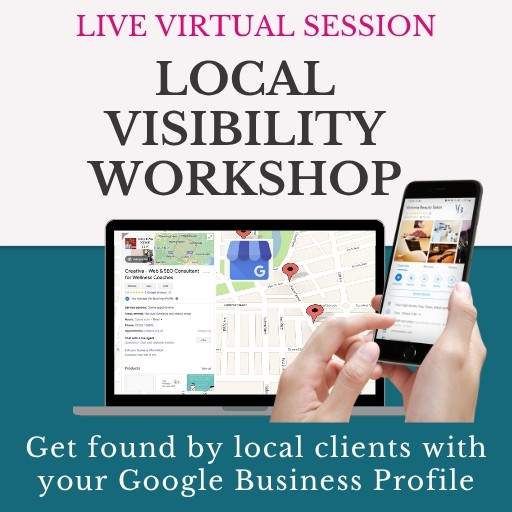
Local Visibility Workshop
Maximise Your Google Business Profile
Learn how to make the most of this essential local business tool so you can leapfrog the competition and gain valuable new clients!
Want more clients without the social media grind?
Join my free newsletter for simple website & SEO tips that help you get found.

Get more traffic & sales through your website without social media!
CONNECT
© Copyright 2026 Built with FEA Create * | designed and developed by thewebsitesuccesshub.com
Based in Marston Moretaine, Bedfordshire - helping women in business worldwide