Tired of the social media treadmill? Download the free local visibility checklist ➔

Six Months Running a Business Without Social Media
By Jules White | Published 6th August 2026 | reading time: 9 minutes

🎙️Listen to this epsiode🎙️
"The lie that we are sold is that you cannot have a successful business without social media."
Can you really grow a business without social media? It's the exact question I typed into Google myself back in 2022, and it's the one I want to answer honestly here. Six months ago, at the very end of January, I decided I was done with it.
I almost didn't write this at all. A bit of imposter syndrome crept in, because leaving social media didn't magically transform everything overnight, and I wasn't sure I was allowed to talk about it without some sensational success story attached. But the proof was sitting in my own numbers the whole time.
So if you're a small business owner or entrepreneur who suspects social media isn't doing much for you, yet feels too nervous to step away, this is for you. I'll show you what six months without it has really done for my business, walk you through how you could start, and then share the honest ups and downs underneath it all.
Key Takeaways:
Social media is optional, not compulsory:
You can run and grow a business without depending on the feed, and my podcast passing 16,195 downloads with no social media promotion is the proof.
One big month isn't the measure:
February was my best month ever, and the months after were the normal ups and downs, which is exactly how running a business goes.
Know your numbers first:
Before you leave, look at your data and see what social media is genuinely bringing into your business, rather than assuming.
Intentional beats constant:
Using social media deliberately, on your own terms, is a world apart from being pulled to it all day long.
Can you really grow a business without social media?
Let me answer that head on: yes, you can. The clearest proof I have is my own podcast. I've just crossed over 16,195 downloads, and I've never promoted it on social media or paid for a single ad. When I started it two years ago, I made a deliberate decision that I would never grow it that way, and it's turned out to be one of the best decisions I've made.
I left social media at the end of January, and February was my best month ever in my business. I was more focused, doing more real relationship building and getting to know people in my local area. Now, I want to be honest with you, because that doesn't mean every month since has been my best ever. Business is up and down, especially when you're a small business owner or a service provider who always needs new people coming in.
So leaving didn't magically fix everything, and it didn't tank things either. The sky simply didn't fall. And the growth that mattered was happening unexpectedly in the background the whole time, which brings me to the thing that genuinely surprised me.
Know your numbers before you step back
When I looked back over my podcast numbers for the last six months, I realised I'd been making assumptions. I thought the podcast was doing around a hundred downloads a week. It was actually about two and a half times that.
Downloads are a bit of a vanity metric on their own, I know that. But the more people listen, the more my email list grows and the more discovery calls come in, and those people often arrive already feeling like they know me. The point is that I'd been discounting real growth simply because I wasn't paying attention to the real numbers.
So before you leave social media, look at your own data. Open up your Google Analytics and actually see whether social media is bringing people into your business, or whether you've simply assumed it is. That one honest look changes everything about how confident you'll feel stepping back.
How to step back from social media
If you're thinking about stepping back right now, start by knowing your numbers. If you're not sure how, you can book a Website Clarity Power Hour with me, and we'll look at your Google Analytics and Google Search Console together so you can see what's really working.
Then weigh it up honestly. Even if social media is bringing in the odd client, is it worth the time and emotional bandwidth it takes? If you want to reduce it, don't delete your accounts, just leave a note saying where people can find you instead, and build up other ways to connect first.
- Know your numbers: check your analytics and see what social media is actually bringing in.
- Don't delete your accounts; leave a note pointing people to where you'd rather be found.
- Build other ways to connect first, through communities, relationships and getting in front of other people's audiences.
- Make any social media use intentional, on your terms, rather than a daily reflex.
Those other ways might be local communities, real relationships, getting in front of other people's audiences, or starting a blog again, all the things that have always actually grown my business. It's also why I've built the Success Without Socials community, a place to connect with like-minded business owners away from the feed.
If you'd like more structured help, you can join the Website Growth Club for step-by-step lessons and group support, or work with me one-to-one through consulting. And for the fuller picture of the specific ways I've done this, listen back to my series on growing a business without social media (episodes 136 to 141).
The 10K month myth
Now for the part that nearly stopped me recording this. I didn't drop social media and then suddenly get onto the 10K months, and I think that's worth talking about, because it's part of why so many of us feel like we're not succeeding. We've all bought into a story that if we're not hitting a particular figure, whether that's 5K, 10K or 20K months, then we must be failing.
For a lot of small business owners, that simply isn't true. If you're doing what you need to pay the bills and to have the life you like, why are we all chasing magical numbers that so often cost us our sanity to reach? Those numbers usually come at the price of spending all your time on social media, doing marketing you hate, and feeling miserable while you do it.
Stepping away has loosened that grip on me. Being more involved in local business communities has helped too, because I get to see real people working with real clients, making a living and feeling happier for not chasing someone else's scoreboard.
What six months without social media actually felt like
The biggest thing? I've enjoyed it. I no longer have that nagging feeling that there's always something more I should be doing, another post to write, more people to connect with, more followers to grow. All those shoulds, gone.
I was never a heavy user, I didn't even have the apps on my personal phone, but it still took up more time than I thought, in little snippets that steal your attention without you noticing. Removing it was freeing, and in the first couple of months especially, a lot of the noise in my head quietened down. Less comparison, less of that constant low-level sense of failure.
It didn't magically fix everything. I still have my shiny-object moments. But not having that extra noise coming in makes a real difference.
Using social media on my own terms
I should be honest about something, because I felt a bit funny admitting it. I still log into Facebook once a week, because I'm a wild swimmer and I need to check whether there's a swim on in my group. And if I see I've been tagged, perhaps someone recommending me for SEO help, I won't ignore it. I'll send a thank you, because that's simple relationship building.
The odd direct message is genuinely useful too. If someone messages me on Instagram it comes straight through to FEA Create, so I can reply without ever logging in. I check my LinkedIn messages about once a fortnight, and that's all I do there.
You might think that makes me a hypocrite, and that's okay. For me it isn't about cutting off my nose to spite my face. This is the whole point: social media is optional, not forbidden. The difference now is that it's intentional. I choose when I log in, rather than being pulled there all day. If you want the deeper why behind all of this, my original Social Media Is Optional series is where it all began.
Networking without collecting followers
One thing I've deliberately changed is how I handle meeting people. The reflex, the moment you meet someone, is "where can I follow you?" I've stopped doing that.
It's so easy to end up collecting followers and connections. I've got over 2300 followers on LinkedIn, and I couldn't possibly keep a real relationship going with that many people. Posting your updates out into the void isn't really keeping in touch anyway.
"We try and build those relationships, rather than just collecting another follower, like people are Pokémon, really."
So now, if I meet someone and feel we genuinely click, or there's a real reason to stay in touch, I'd rather swap numbers. I have a work phone for exactly that. And if it's not quite that moment, I'm happy to let it go and see if our paths cross again. That's happened naturally with my local NatWest Accelerator group, getting to know people over weeks of meeting in real life.
What I gained: living more intentionally
The mental headspace has been the biggest gain, but it goes deeper than that. This year has been about intentional living, about not looking back one day and feeling I scrolled my one precious life away.
It's been the hardest year, too. We lost my dad in August, and that has been a real reminder to get away from screens and back to the things that actually matter: people, nature, the things I love doing.
This morning it landed in the smallest way. There's a man I see on my dog walk every day, always on his phone. Today he was hunting for blackberries, and I pointed out where the big ones were. He said he walks there every single day of the year and had never seen them. Well, that's because your head's in your phone. When we lift our eyes, there's a whole world right there. I've read more books these last few months than I have in years, reaching for my Kindle instead of my phone.
Notable Quotes:
"Social media is optional."
"I don't want to cut my nose off to spite my face."
"Business is very up and down, especially if you are a small business owner."
"It's amazing how, when we lift our heads, when we look away from our screens, we look at the beauty that's here."
Episode at a Glance:
- 00:00 Introduction
- 01:12 The Decision to Quit Social Media
- 05:41 Rethinking Success & The 10K Month Myth
- 07:35 The Podcast & Knowing Your Numbers
- 10:09 The Mental Freedom of Leaving Social Media
- 13:10 Still Using Social Media (Occasionally & Intentionally)
- 16:07 Breaking the Habit
- 18:39 Networking Without Social Media
- 21:08 Intentional Living & Real-World Connection
- 24:07 How to Grow Your Business Without Social Media
- 26:19 Practical Steps & Next Actions
Links to Resources Mentioned:
- 🔗 Why social media is optional — my philosophy on building a business that doesn't depend on the feed.
- 🔗 The Success Without Socials community — the community I'm building for business owners who want to connect with like minded people, who wan to grow their business away from social media.
- 🔗 Book a Power Hour with me — I can help you understand your Google Analytics and Search Console, so you can see what's really working, and whether leaving social media is the right decision right now for your business.
- 🔗 My series on growing a business without social media (episodes 136 to 141) — the specific ways I've done it.
- 🔗 My original Social Media Is Optional series (starts at episode 102) — why we deserve a break from social media.
- 🔗 One-to-one consulting — more tailored, personal help with your website, SEO and marketing.
- 🚀 The Website Growth Club — my membership for established business owners who want their website to bring in clients without relying on social media.
Build a business where social media is optional
Inside The Website Growth Club, we help established business owners get found online through their website, without posting every day.
Find Out More∧ Transcript
Introduction
Welcome back to the Website Success Show. It is Jules here, and today I had an episode that was going to be called Your First 90 Days Without Social Media, but as I was gathering some thoughts on this, I realised it's been six months since I decided to break up with social media.
So instead of recording Your First 90 Days Without Social Media, I thought I'd just record my thoughts on this. And any advice that I would give you, really, just to help you understand the ups and the downs. And there aren't that many downs, I have to say.
But just to help you understand how it's gone over the last six months and what a difference it's made to my business. And I hope you find it helpful.
So when I started really diving into this, I almost then didn't record this episode, because I started to get a little bit of imposter syndrome, as we do. It being not the massive success and the massive game changer in my business that you would want, as a sensational, like, yeah, I did this and it magically fixed everything. And that's not what happened.
The Decision to Quit Social Media
So let me take you back to the end of January, when I decided that I was done with social media, and I have been skirting around this forever in my business. Always, really.
Back in 2022, when I had just started my business, the way that I found the Female Entrepreneur Association and got involved in that network and that community was from Googling, "Can you grow a business without social media?"
And I found one of Carrie's videos, and so it's always been there. It's definitely always been there in my business. It's always been there for the podcast as well, so even the second episode, I think, is around social media and how you can break free from it.
So definitely, it's always been there in the background. I've always been skirting around it.
Up till this year, I hadn't been brave enough to just see how it goes. And I say that, but actually with the podcast, when I started the podcast two years ago, I made that deliberate decision that I was never going to grow it on social media.
I never promoted it on social media. I never paid for ads, and I'm so glad that I did that.
That has been one of the best decisions I've made in my business. I have just crossed over to 16,195 downloads.
So that is fantastic, because it's never been promoted on social media. And when I talk to people, they seem to really love that.
They love that success story. They love that proof that these things can work, that you can actually promote things and grow your business without having to depend on social media.
And so, the end of January, I decided, well, what's the worst that's going to happen if I do it? If I decide to break up with social media and it doesn't work?
And, you know, worst case scenario is I go back to using it every now and again, which was all I was doing as well. That's probably one thing I would say, is that I wasn't massively using social media to promote my business anyway.
I certainly have, over the years, had launches and times when I was more active on social media. But it's never been a massive part of promoting my business.
I never had the apps on my personal phone, so I didn't spend hours and hours scrolling social media, I thought. But what I have realised is that it was taking up more time than I thought. I was spending more time on there.
And it's just the little snippets of time, I think, that's the thing where it really sort of steals your time and steals your attention.
And so I thought, well, let's go all in. Let's see what happens. What's the worst that's going to happen?
I didn't do any big public announcements about it. I was in my NatWest accelerator programme, and I did announce it in the group, and everybody seemed to really love that as well.
I think it definitely resonated with people. And so that was the end of January, and then February was my best month ever in my business.
And I love that. I love the fact that that happened, and I definitely was more focused.
I was doing more relationship building and more getting to know people in the local area. So I definitely feel like that was a big part of it, the fact that I was actually getting out and talking to real people, having real conversations and doing the other things that I have now started doing that are helping me to grow without socials.
And I think that was part of the reason why I had these hesitations, really. Because yes, I broke up with social media and then I had my best month ever, but that doesn't mean that the following months were then also my best months ever.
So business is very up and down, especially if you are a small business owner, especially if you are a service provider, or you naturally have a business where you always need new people coming into your business. Which my business is definitely like.
I'm not an SEO agency, so I don't get you on the books and then just keep charging you money forever. Deliberately, you know, my goal with my business is that I help you to understand what you need to do with your SEO and with your marketing and with your website, so that you then don't need me.
You don't have to rely on me. And that is part of the reason why I need to keep marketing my business.
I do have the Website Growth Club, which is amazing, and I love having people. They generally will stay in there for the accountability, for the support, for the Q&As.
But in terms of one-to-one services, I always need new people coming in. And even with the membership as well, I am growing it, I'm trying to grow it, and I need leads all the time, as the majority of businesses do, really.
Rethinking Success & The 10K Month Myth
My hesitations around recording this were that I didn't drop social media and then suddenly get onto the 10K months. And let's talk about the 10K months, because I feel like this is part of the reason why we often feel like we are not succeeding and not successful, because we've all bought into this story.
We've all been told this story about, if we are not hitting a particular figure, whether it is 10K, 20K, 5K, whatever it is, that if we are not hitting these particular numbers in our business, then we are failing.
But for many small business owners, that shouldn't be the case. And if you are doing what you need to in your business to pay the bills and to have the lifestyle that you like, then why should we then be trying to hit these magical numbers?
That, yeah, lovely, we'd all love to be doing these big numbers potentially, but not if it then steals your sanity. Means you've got to spend all of your time on social media, you've got to do loads of marketing that you hate doing in your business, and generally it makes you miserable.
So I think this time away from socials has helped me to have a little bit less of that, a little bit less of that buying into the success that is deemed as this public number.
That if you're not scalable, if your business isn't growing that way, if you're not selling to the masses, then your business isn't a success, really.
So I think definitely being more involved in local business communities has helped me with that. Helped me to see the people that are out there getting on with it, working with real clients, working with customers, making money, and just happier, because they aren't feeling that constant feeling of, I should be doing more, I should be...
Part of what I wanted to share, in terms of how I felt, was the hesitations around that, really.
The Podcast & Knowing Your Numbers
One of the things that I would say is that when I looked at my own podcast numbers, I'd definitely been making some assumptions around this. So I looked back over the last six months at what's happened with the podcast downloads each week.
And downloads is a bit of a vanity metric. It doesn't necessarily lead to clients, but I do find that the more people that listen to the podcast, the more my email list grows, the more discovery calls I get coming in.
And that's fantastic. And generally, if people come into a discovery call and they've been listening to the podcast, they are way further along the buyer's journey.
They pretty much know that they already want to work with me. They just want to find out the best way for that to happen, really, because they've had me in their ears.
I've had people come on and say, "I feel like I know you, Jules, because you've been in my ears for the last two weeks." And that's amazing.
It's a really quick way for people to get to know you. They actually like you, they like the sound of you, and they understand how you work.
And I think the podcast has been fantastic for that. I thought the podcast was doing about a hundred downloads a week, and when I looked yesterday, looked at the numbers over the last six months, it's actually been about two and a half times that. Which is amazing, and I'm so pleased to have actually discovered that.
And that doesn't necessarily mean 250 people a week listening to the podcast, because people sometimes download the back catalogue, or you get the same person listening to a few episodes.
And that's why you tend to measure it on the number of downloads an individual episode has when it first gets released. Because generally then that's, you know, the number of listeners you've got.
I'm still okay with 250 downloads a week. I'm really pleased with that.
If you'd have told me two years ago that I would be at that point, be it six... over 16,000 downloads, and having that number of downloads a week, I would be over the moon.
And what I also love is when I meet people in real life, or on a Zoom call or something, if they're listening to the podcast, they tell me they're enjoying it. And that's what this is all about, that they find it helpful, maybe find it interesting and entertaining, and, you know...
Or, I don't know, entertaining is not the right word. I'm not an entertainer, but it's, you know, it is nice to listen to, and you get some value from it.
That's the main thing that I enjoy about the podcast, and that I feel like I'm building this bank of content as well, really.
So that's one thing I would say, is it is always good to know your numbers. And I think this is really important with social media.
And if you're thinking about leaving social media, then it's really important to understand what your numbers are, what it's actually doing for your business. Look at your Google Analytics, look at your data around that, and see whether social media is actually bringing people into your business.
The Mental Freedom of Leaving Social Media
So let's sort of talk about how it's actually felt these last six months. I think that's the biggest thing for me, is that I have enjoyed it.
I've enjoyed not having that feeling of, there's always something more that I should be doing. I should be creating a social media post, I should be interacting, I should be connecting with people, I should be growing my followers, I should be... should, should, should, should.
All of these shoulds that we kind of feel like we should be doing. And once I took that off the table, once I then was like, no, I'm done with it, it's been so freeing, I have to say.
So, as I say, I wasn't a massive social media user anyway, so it wasn't like this was, you know, five hours of my day. But even still, even with the short amount of time that I would use each day, and it was probably a lot more than I thought, actually, I still notice a massive difference of just not having that pull there.
Of, oh, just quickly check, or just quickly check, or just see what's going on, those kinds of things. Where once you actually remove that from your business, it's just one less thing to focus on.
And I think my big thing this year has been about being intentional. So living a life where I'm not being pulled to do things that I will look back on my life and wish I hadn't, sat scrolling my life away, basically.
I don't always do it, definitely. I sometimes still fail, and I'm not scrolling social media, but there's still things on the internet, on your phone, and just scrolling for garden ideas and all of that kind of stuff. That I feel like it's an ongoing project to get less time on my phone, basically.
Less time on the internet, less time in front of screens. I think that's the big thing.
AI is definitely contributing to that as well, of, I want less time with all of that kind of stuff, really. Less time with the tech, more time with the real-world relationships, with people, living and actually doing real-life stuff, rather than just this digital life that we seem to have all fallen into, I think, really.
So it was definitely freeing. I got so much more mental clarity back, especially in the first couple of months, where I really noticed that a lot of the noise in my head had kind of quietened down a little bit.
A lot of the imposter syndrome and a lot of the comparisonitis, which is definitely still there, but there's a lot less of that now, actually. That constant failure feeling, because we're not doing as much as other people, and our lives aren't as good as the storyboard version that we see, you know, the edited reel that we see on social media.
I definitely feel one of the big benefits of it is that you kind of get your brain back a little bit. And it's not to say that it magically fixed all the issues, all the issues we have with attention span and shiny object syndrome.
And I definitely still have that, but it makes a big difference not to have that extra noise. I think that's what it is, it's just noise coming into our brains when we're on there on social media, and it's just all of this, too much stuff coming in, really.
Still Using Social Media (Occasionally & Intentionally)
So one thing I should mention, because this was, again, something else where I felt a little bit like, oh, I don't know, what are people going to think if I say this. I actually still have to go onto Facebook once a week, because I'm a swimmer, I have to log in to see if there's a swim going on in the community that I'm in.
And when I do that, if I see in my notifications I've been tagged, then I will go and have a look at that. And I try not to do any interaction on that actual post, but if somebody has tagged me in a group, someone looking for help with SEO or looking for an SEO expert or whatever, I don't want to just ignore that.
I feel like that's part of this relationship building, is if anybody ever tags me, and I hear about it, I will always reach out to them and say thanks. I think it's really important to do that.
If you want people to keep tagging you, then show a little bit of appreciation around somebody actually tagging you. And so there's that.
So I definitely don't ignore everything. If I see that I've actually specifically been tagged, and it's something where someone is, you know, recommending me, I will make sure that I then send them a message and say thanks.
And normally what I will also do is then message the person who has originally asked, just send them a message. That doesn't always play out, because sometimes people don't get those messages, but I am deliberately trying not to then interact on the posts when people do tag me.
That's kind of where the downside of this is. The one thing that social media is handy for is being able to DM people.
And again, there's probably good and bad with that, if you're getting DMs from spammy people who you weren't asking to DM you, maybe, like someone who's been tagged on a post or something. But anyway, it is handy to be able to send people a message.
If somebody messages me on Instagram, that comes straight through to FEA Create, and I love that, because it means that I can answer that message without actually having to log into Instagram. I normally log into LinkedIn about once a fortnight as well, and see if there are any messages in there.
And that's all I do, log in, answer messages. If there are any that are actual messages from people who I've met, normally I will try and then say I don't log in very much, so if you want to connect, here's my number.
Or I tend to at least explain that I don't come back to people on LinkedIn very quickly. And you might think that I'm a hypocrite for doing that, and that's fine, that's your opinion.
What I would say about that is that I don't want to cut my nose off to spite my face. So I feel like that is my, what's the word I'm looking for, my middle... not, it's not even middle ground, because it's, you know, completely different to that constant pull of being on there all the time.
It's intentional. I guess that's the thing, is it's intentional.
I intentionally will log in and check my messages and just build those relationships on there, really. So that's the only time really that I use it.
Breaking the Habit
And within those first few months, you have to break the habit. And I think, to begin with, there was that habit.
And I have things like a blocker app on my phone, and, as I say, I don't have the apps. So if I do log in, that's probably another thing I should say, if I do log in to check messages or anything, I will do that on a desktop anyway, so I don't go onto the websites on my mobile.
But breaking that habit, it is probably one of the hardest things, really. And actually, one thing I used to do when I used to use social media, and this helped me a lot, was I used to limit myself to 20 minutes of scrolling three times a week.
And as soon as I started doing that, then I found that I didn't actually want those 20 minutes, after a while, because you break that habit. Those 20 minutes didn't seem so important.
And actually, I didn't bother then, and I was quite good at sort of weaning myself off of it then, before I even broke up with social media.
Oh, so one of the things that has happened when I've been doing a promotion, so when I've been promoting something, at the moment I'm promoting my Local Visibility Workshop. And I did get that thought of, oh, social media could be a place to promote this.
And obviously I wasn't going to do that, but I noticed the thought being there, of, oh, I wonder if, if I promoted it on socials, whether I'd get some more sales. And that was something I just wanted to note, that I had that thought there.
Maybe I would have done, but for me, it wouldn't have been worth that one or two extra sales, because of what it would cost me to be able to do that. So it cost me in time, mental clarity, the whole thing of building a business that's successful without social media.
And that is the direction my business is going in. It is now what I absolutely believe in, that it is possible, and I want to inspire other people and bring other people together who also have that mindset, that they don't want to rely on social media.
And one thing is, it's optional. That's what I would say, social media is optional.
So I never want it to be that social media is forbidden, or social media is, you can't use it. It's the whole thing of optional.
So if I choose, so, like for me, if I choose to use it occasionally for checking messages and for checking my swim group, that's okay. Because it's my option, and I choose to do that.
But the whole thing with this is the lie that we are sold, that you cannot have a successful business without social media. And that's what this is all about, that's what this whole message and this whole six-month experiment has been about as well.
Networking Without Social Media
So one of the things that I have definitely approached differently, and another one where I've just found that slight, I wouldn't want to say problem, or slight hiccup, is when you meet people. So when you're networking, or when you just generally meet people, and the immediate reflex is to follow on social media.
Oh, where are you on social media? And I see it happening as well.
I see people having this conversation, "Where are you on social media? Where can I follow you?" And I've deliberately not done that.
I think we can end up just collecting followers, really, and collecting connections as well, because that's the reflex, to do that. And the number of people that I'm connected with, like, I think I've got on my LinkedIn something like 1,500 followers, or connections, or whatever it's called on there.
Probably more than that, actually. And it's like, well, I can't keep relationships with that many people.
I don't really know that many people, and I don't want to have to think about maintaining relationships with that number of people. And I think posting and sharing your updates on social media isn't really keeping in touch with people.
You know, if I meet somebody, and I feel like, yes, this could be a really good connection, or I feel like we really click, or I feel like there could be potential for collaborations, or if they've said they're interested in my services, I don't want to just follow them on social media. I would rather exchange numbers, if they're okay with doing that.
I have a work phone, so that's exactly what it's for. And if not, if it's not at that point where you meet somebody and you think, oh yeah, they're nice, but you don't necessarily feel that immediate, yes, I need to keep in touch with this person, then I'm okay with letting that go out into the universe.
And if our paths cross again, then maybe we exchange numbers next time. Maybe not.
Maybe we just get to know each other from an incidental meeting. And that has definitely happened with my NatWest group, is I've got to know people over the few weeks and months, really, that we have been there meeting in real life.
And it doesn't have to be that you follow people on social media to feel like you're connected with them. And I think, if anything, it robs us of that feeling of real connection, real relationships that we actually do try and maintain.
And we try and build those relationships, rather than just collecting another follower, like people are Pokémon, really.
Intentional Living & Real-World Connection
There are definitely things that I've gained in my day-to-day life from not having the social media there. As I mentioned, the mental headspace has been the big thing.
Just reconnecting with the outside world, and this theme of intentional living and not looking back on my life with regret and with feeling like I wasted my one precious life, has definitely been part of this. It's been a really hard year, over the last year.
We lost my dad in August, and it's been the hardest year ever. And it's been a real reminder, actually, for me, that getting away from screens and getting out there and connecting with people and connecting with nature, connecting with the things that I actually enjoy doing.
Living my life in an intentional way has become more important than ever for me. And I want to help other people to do that as well.
So that's a big, big part of the mission, helping people to step away from their screens, live a real life. Not that a screen isn't a real life, but live a fulfilling life with intention.
So, yeah, if that sounds a bit preachy, I'm sorry. But that's just part of the thing that I love.
And this happened this morning. I was walking the dog, and, you know, I'm very lucky that we live near a nature reserve, which I'm very fortunate here.
And there's a guy who is walking along, talking to somebody on the phone, every single morning. Has his phone out in front of him, and he's on the phone.
But this morning he was on the phone, but then he's looking at the blackberry bushes, and as I walked past, I heard him say, "Oh yeah, there's loads of them, there's loads of really big ones here." I was like, oh, are you looking for blackberries?
And he said, yeah. I was like, oh, well, over the bridge, there's loads over there, and there's loads there.
And he was like, "Oh my God, I walk here every day of the year, and yet I've never seen them." I just want to say, well, that's because you're on your phone every day, you're looking at that. Because he literally is walking along looking at his phone.
And it's amazing how, when we lift our heads, when we look away from our screens, we look at the outside world, we look at the beauty that's here, how inspirational and, like, awe-inspiring it is, really. And it is so inspiring then to see that outside world, that natural world, and what is there when we step away from our phone.
So, all that to say, very much about intentional living, about getting time back, getting brain space back as well. I have read more books than I have in probably the last few years, so that's been great as well.
Because it's just made me, rather than reaching for my phone whenever I've got a break, I'll reach for my Kindle, and I'll just sit and read my book, or do one of the craft things that I love doing. I have so many things that I want to do that aren't screen-related, and it's made me really intentional about getting on with those, really.
So that's kind of the good side of it, in terms of actually what has helped me. Let's talk about, so I've recorded some podcast episodes.
How to Grow Your Business Without Social Media
So, episodes 136 to 141 are all about the ways that I've grown my business without social media. And I hope, if you listen to those episodes, that gives you some inspiration about the main ways that I've done this, and actually how I have grown without socials.
One thing I should probably say is that my business didn't grow massively with social media. So I think that was part of the reason why I felt I could step away from it, because it never bought me clients.
And that's what I hear time and time again with so many of my clients, and people, you know, in my world, email subscribers who tell me that they don't really feel that social media is doing much, but they don't feel like they can step away. They feel like, oh, I just have to keep a presence there.
And I don't think it's true. I would say, don't delete your accounts.
There's, again, no point cutting off your nose to spite your face. But put something on there to say that you're not there, and tell people where they can connect with you and how they can find out more about what you do, and make that an intentional thing.
I still haven't done that yet, and I definitely will go back and do that. I've done it in my Facebook group, but I haven't done it anywhere else, where I've put on there that I'm not using this anymore, come and find me on my podcast, or come and join the Success Without Socials community.
So definitely, look at your data, and consider how many clients are coming in through social media. And if it's none, if you are looking at your stuff and you're realising, actually, it's really none, or, compared to the amount of time I'm spending on this, it's really not worth the effort, then that's the point to really start thinking about, okay, what can I do that is going to bring people into my business.
How can I build relationships? How can I get the word out about me? How can I start getting in front of other people's audiences? You know, those kinds of things, which have always been the ways that I've grown my business.
I think not having the social media there, almost like a fallback, has made me more intentional about being in communities outside of social media, building relationships, getting my blog up and running again as well. Actually, that's one thing that I have done.
And that's only been recently, probably in about the last six weeks or so, that I've really started making sure that when I do have an episode that I know is a cornerstone piece of content, then that will get turned into a blog.
Practical Steps & Next Actions
So, if you were thinking about stepping back right now, I would suggest that you firstly know your numbers, so know what's happening with your figures. If you don't know that, and you want some help with understanding your Google Analytics or your Google Search Console, or what's actually happening with your data, then you can book a Power Hour.
We can have a little look at that together, and I can help you to understand whether what you're doing is actually working. And also, you can think about whether what you're doing, it might be working, but if it's costing you three quarters of your business week in terms of time or emotional bandwidth, or the extra hours that you get drawn into social media because you're just happening to be on there, then it's also worth considering whether it's worth it.
And if it is, if you're finding that it is bringing new clients, but you know that you still want to reduce that in your business, then it's thinking about, okay, how can I start building other ways up of getting in front of people, and make it more of a gradual leave of social media? Start to put a plan together of how else you could connect with people.
Come and join my Success Without Socials community. It's a place where you can connect with like-minded business owners, so it's a community outside of social media.
It's not noisy, it is not crazy in there. I'm building it with intention, and you can come in and help me shape the community.
Let me know what you want to see in there. Let me know how you want to connect with people.
And spend time in there intentionally, because you want to be there, rather than just interrupting your day. That's my goal, that it doesn't just interrupt your day.
So go back and listen to episode 102, which was the start of the original series on Social Media Is Optional. So there's a few episodes after that, so I think 102 too, I think it's 106.
You can listen to those episodes, and that talks about why social media is harmful, why we deserve a break from it, why it is biased against women as well. So go and have a listen to those.
Have a listen to the series, 136 to 142, that I mentioned, about the ways that I've grown my business without social media.
And if you'd like to break free from social media dependency, I understand that it feels scary. I really do get it.
I get that we are constantly told that we need to use social media, but there are a few ways I can help you if you are looking at breaking free. So if you want to take charge of your visibility, if you are fed up with marketing your business and it not working, and if you want your website and your Google Business Profile to bring you a steady stream of clients without having to create content all the time, posting and hoping and getting very little back from it, you can join the Website Growth Club for step-by-step lessons and group support, or one-to-one consulting if you prefer more tailored help for your business.
So thank you so much for listening. I hope this has been helpful, and maybe inspired you to even just consider starting to step back from social media, starting to even think about whether this could be something you could do in your business.
So hopefully that's helped you, and I'll see you soon. Bye.
Join like-minded business owners growing without constant reliance on social media or burning out from posting.
Join the Community
Download The Local Google Visibility Checklist & Get Fully Booked Without Social Media
Free Download
Discover Your Core Topics: The Roadmap to Website Success
Free Download
Jules White is a Website & SEO Marketing Consultant and Founder of The Website Success Hub.
She helps female business owners & entrepreneurs grow without social media - teaching them how to show up on Google, get recommended in AI search, and turn their website into their hardest working team member. So more of the right people find them, book with them, and buy from them - with intention, not constant hustle.
Read more on the blog

Are you spending hours posting on social media - yet still not getting the clients or sales you want...
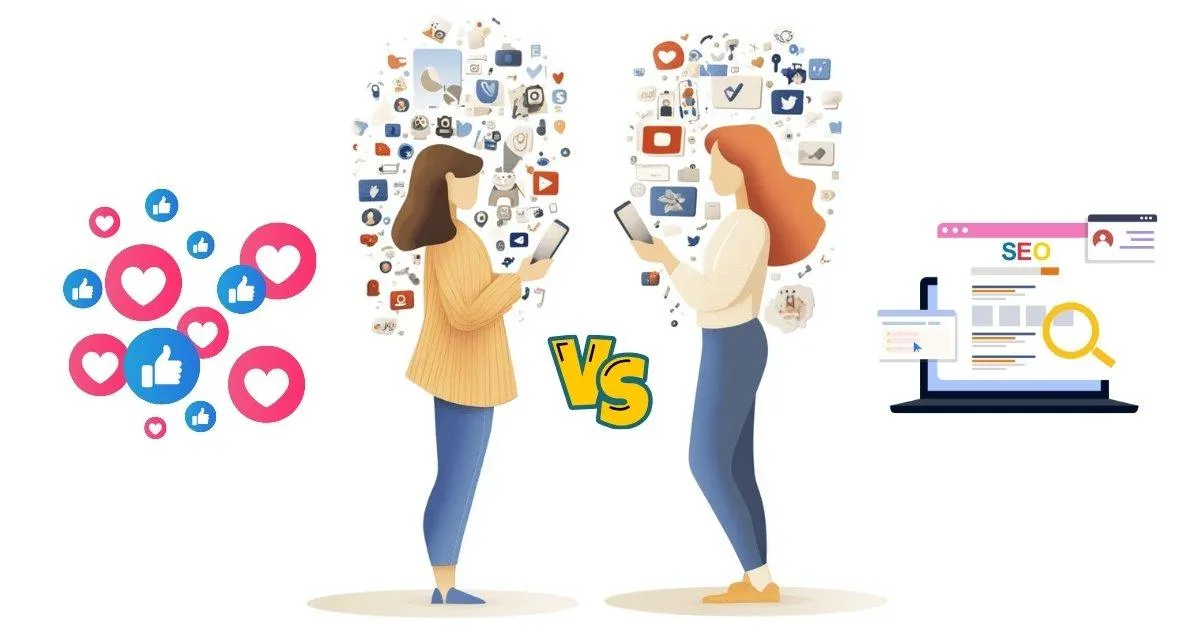
Social media vs SEO: 5 myths that could be hurting your business! Discover the truth about website traffic & sustainable marketing...

If you're looking for alternative ways to market your business, I thought I'd go through my top three...
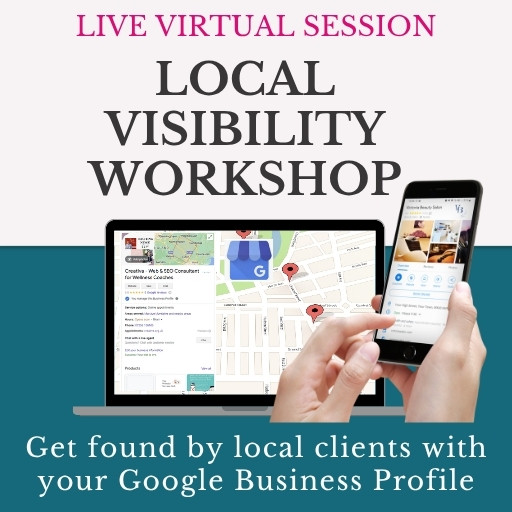
Local Visibility Workshop
Maximise Your Google Business Profile
Learn how to make the most of this essential local business tool so you can leapfrog the competition and gain valuable new clients!
My recommended platform
* this page contains affiliate links - if you decide to purchase FEA Create I may earn commission, the price you pay remains the same. I only recommend software & services I believe in and use in my own, or my clients businesses.
Want more clients without the social media grind?
Join my free newsletter for simple website & SEO tips that help you get found.

Get more traffic & sales through your website without social media!
CONNECT
© Copyright 2026 Built with FEA Create * | designed and developed by thewebsitesuccesshub.com
Based in Marston Moretaine, Bedfordshire - helping women in business worldwide