Tired of the social media treadmill? Download the free local visibility checklist ➔

How to Use Content You Own to Grow Without Social Media
By Jules White | Published: 17th June 2026 | reading time: 5 minutes

🎙️Listen to this epsiode🎙️
"Your own content compounds in a way that social media never, ever will."
If you've been creating content for years but your website still isn't bringing in the enquiries you hoped for, this episode is for you. I've been talking about owned content since episode two of this podcast, and I'm still talking about it, because the message still isn't landing for enough business owners. The principle is simple: the content that exists on your website and in your podcast belongs to you. No algorithm can take it away.
But owning your content isn't enough on its own. That's what I want to dig into here. Because there's a real difference between creating content strategically and just creating content for the sake of it. And right now, with AI changing the way search works, that difference matters more than ever.
In this episode I share my own content journey, including what happened when I stopped adding new content to my website, what I saw in my Google Search Console data when I started again, and how approaching my podcast and blog differently has changed things for me.
Key Takeaways:
Own your content first:
Your website and podcast are assets that compound over time. When you stop posting on social media, the traffic stops too. Owned content keeps working long after you create it.
Strategy matters more than volume:
Creating content without a clear purpose is one of the most common mistakes I see. Each piece should have a reason to exist and connect to the rest of what you've created.
Commodity content won't cut it:
If AI can generate the same content you're producing, the bots have no reason to show yours. Your real lived experience, client stories, and unique perspective are what make your content worth finding.
Core pages before content:
Before you write another blog post, make sure your services pages, homepage, and booking pages are doing their job. Blog traffic that doesn't link to what you sell isn't helping your business.
Your podcast is a trust asset:
Discovery calls with podcast listeners often start with "I feel like I already know you." That kind of warm relationship is almost impossible to build through social media alone.
Why owned content is the foundation
I've been saying this since episode two, and I'll keep saying it: the content you create for your own website and your own podcast belongs to you. No platform can change its algorithm overnight and make it disappear. No account gets suspended. No reach suddenly drops to zero. It's yours.
The content that exists on your own domain is helping Google and AI bots understand what your business does, who it serves, and why you should be trusted. Everything else online should be pointing back to that. Not to your social media profiles, not to someone else's platform. To your website, which you own.
"Everything else online, all points back to your website, which you own, and no algorithm can take that away from you."
The problem with content for the sake of it
Owning your content is only half the story. The other half is making sure that what you create actually has a purpose. I speak to so many business owners who are blogging or creating social media content just to keep a presence, just to keep things ticking over. And meanwhile, the pages that could actually bring money into their business, their services pages, their booking pages, their product pages, are being neglected.
I've worked with a client whose blog posts were genuinely getting traffic. People were clicking through and reading. But there was nothing on those pages linking to what they sold, nothing guiding the reader to take a next step. All that traffic was going nowhere.
- Does it support one of my offers or services?
- Does it link to other relevant content on my website?
- Does it help someone move closer to becoming a client?
- Could it keep working for my business in a year's time?
As the CEO of your business, the strategy has to come from you. Even if you have someone helping with your marketing, outsourcing the strategy entirely is how you end up with content that's general, disconnected, and not doing anything for your business.
Commodity versus non-commodity content
This is something I talked about in episode 135, and it's becoming more important by the month. Commodity content is anything that AI could generate on your behalf without any input from you. General how-to posts, broad informational articles, the kind of thing that's already been written a hundred times. The bots can create that content themselves now, so there's no particular reason for them to show yours.
Non-commodity content is different. It's the content that only you could create. Your real experiences working with clients. The results you've achieved. Your opinions built from years in your field. The things you've noticed that other people in your industry aren't saying. That's the content that builds authority, earns trust, and gives Google and AI search tools a reason to recommend you.
"Your real lived experience, your real unique thoughts on things, your experience of working with clients and customers, your stats from how you've worked with people. That's the content that only you as that unique human being can create."
Should you be blogging?
Not necessarily, and certainly not first. I covered this in detail in episode 131, but the short version is this: if your core pages haven't been optimised yet, writing blog posts probably won't bring the right people into your business. The pages that need your attention first are the ones that already lead to a booking or a sale.
Once those pages are strong, then you can start thinking about whether you need blog content at all, and what form that should take. For local service providers, a well-written case study will almost always outperform a general informational blog. Thought leadership posts that share your genuine experience and opinions will do more for your authority than anything AI could write for you.
When blogging does make sense, I always recommend doing it with a strategy. In the Website Growth Club, we call it the Pinpoint Blogging Strategy. You identify three to five core topics you want to be known for, create cornerstone pieces of content around those first, and build from there. Not volume for the sake of it. Depth and purpose. If you're not sure what your core topics should be, my free guide - Discover Your Core Topics: The Roadmap to Website Success - is a good place to start.
My own content journey
I want to be honest with you here, because I think it matters. When my dad passed away last autumn, something had to give. And the thing I quietly let go of was turning my podcast episodes into blog posts. I didn't announce it. I just stopped.
I was still recording and releasing podcast episodes every week, and I was still enjoying doing that. But the blogging part, sitting down to write, staring at a blank page, that's always been harder for me. I much prefer to talk through my ideas than to write them from scratch. So the blog posts stopped, and I gave myself permission to let that be okay for a while.
When I looked at my Google Search Console data recently though, I could see what had happened. There was a drop-off in traffic from around last September through to about March. Now, some of that will be down to the way Google changed how it reported impressions in September, so if you've noticed something similar in your own Search Console, that's worth knowing. If you're not sure how to read your data, I have a beginner's guide to Google Search Console that walks you through it - and if you want to go deeper, my Google Analytics and Search Console course covers everything you need to start making decisions based on data rather than guesswork. But part of it was also that I hadn't added anything new to my website for months. No new pages, no updated sales pages, nothing to signal to Google that the site was still fresh and active.
Once I started working on my offers again, updating my sales pages, and adding some new blog posts, my traffic started climbing back. The foundation I'd built before hadn't disappeared. That's the thing I love about SEO. The strategic work you do compounds. It doesn't just switch off the moment you stop, unlike social media or paid ads. But it does need tending.
The podcast as a trust-building asset
My podcast is one of the things I'm most proud of in my business. I'm just about to hit 15,000 downloads, without ever promoting it on social media or paying for a single ad. Early episodes are still getting plays. That content I created in the early days is still bringing people into my world, still building my authority, still sending the right people to my website.
What I love most about it is what happens on discovery calls. When someone has been listening for a few weeks before they reach out, they'll often say something like, "I feel like I already know you, Jules." That's the kind of trust that takes a long time to build through social media, if you can build it at all. Podcast listeners arrive warm.
Recording episodes also works with how my brain works. I find it much easier to talk through my ideas than to write from a blank page. And once I've recorded an episode, I can use AI to help me turn it into a blog post that genuinely sounds like me. Not a generic AI article, but something that captures my real thoughts, my opinions, my experience. That's the process I'm using now, and it's one I'd encourage you to think about if writing feels like a barrier for you too.
Your website as the hub
Even if you have a podcast, your website is still the hub. Every episode I release can be accessed through my podcast archive page on my website. That means every time I publish something, my website stays fresh and connected to that content. Everything I do online points back to my website. Not to a social media profile. Not to someone else's platform. To the place I own.
If you take one thing from this episode, I'd like it to be this: focus on content that you own first. Make sure your core pages are doing their job. Make sure the content you create has a purpose and links together. And when you do create something new, make sure it reflects your real expertise and your real experience, because that's what Google, AI search, and your potential clients are all looking for.
Social media is optional. Creating authority content that you own is not.
Notable Quotes:
"We have a choice whether we just contribute more and more and more noise, or we do less and we do it better, and we make sure that everything we are creating in our business is supporting one of our offers."
"If AI can create content that's very similar to the content that you've created on your website, why would the bots want to show your content when they can just create that content anyway themselves?"
"The specific strategic work that we do around SEO, where we are actually trying to show up for the things that matter in our business, that can keep paying dividends for years to come."
"Social media is optional, but creating authority content that you own shouldn't be so."
Episode at a Glance:
- 00:00 Introduction and AI training event
- 01:53 The water bottle story
- 03:02 Growing your business without social media
- 07:32 Commodity versus non-commodity content
- 11:12 Should you be blogging?
- 15:00 My own content journey and SEO results
- 19:19 The podcast as a trust-building asset
- 22:15 Your website as a business asset
- 23:38 Wrap-up and call to action
Links to Resources Mentioned:
- 🔗 Episode 2: Why you don't need to keep feeding the algorithm - where I first talked about owned content and why creating for your own platform matters
- 🔗 Episode 9: Why a content strategy is your first step to website success - the episode where I laid out why strategy has to come before content creation
- 🔗 Episode 12: Own your content - why creating for your own domain should always come first
- 🔗 Episode 131: Why blogging might be a waste of your time and what to do instead - the episode I'd recommend listening to before you write another blog post
- 🔗 Episode 135: What Google actually says about AI search and what you can stop worrying about - where I cover commodity versus non-commodity content in more detail
- 🔗 My beginner's guide to Google Search Console - how to use your data to improve your SEO
- 🔗 Google Analytics and Search Console beginners course - my online course to help you start making decisions based on data, for just £37
- 🎁 Discover Your Core Topics: The Roadmap to Website Success - my free guide to finding the key topics you need to cover to become an authority in your industry
- 🔗 Success Without Socials - join the waiting list for my free community for business owners growing without social media
- 🚀 The Website Growth Club - my membership for established business owners who want their website to bring in clients without relying on social media
Build a business where social media is optional
Inside The Website Growth Club, we help established business owners get found online through their website, without posting every day.
Find Out More∧ Transcript
Introduction and AI Training Event
Hi, it's Jules here. Welcome back to the Website Success Show. I want to talk today about an inspiration I got from an event I was at last week. So I went to a training day on AI and AI for businesses, really, and it was good. I definitely learned a lot, definitely had some things that I will need to revisit. I'm gonna record some future podcast episodes based on some of the things I learned and some of the ideas it sparked in me.
What I really realised was that being amongst other business owners, hearing ideas and hearing what other people are doing helps to really generate some ideas in me. Sometimes when I sit at my desk and try and come up with thoughts and ideas and try and almost think my way through problems, I get stuck. Whereas actually being out there, having conversations with real business owners, I have definitely found has been the best way for me to move forward in my business and is, I think it's a really good example of why taking action is better than trying to overthink things.
We were doing some vibe coding of websites, and I'm still getting my thoughts together on that, really. I don't think right now it's the right thing to be building websites fully with vibe coding, but that's not what I'm talking about today. So look out for a future episode around that.
The Water Bottle Story
I talked a couple of weeks ago in episode 137 about the ways that our brain tries to make us worry about what other people think. And I talked about the fact that I walked into a big networking event earlier this year and dropped my water bottle on the floor with the lid off. And you would not believe this, but I actually did it again on Friday. So it was a different water bottle. But I walked in, filled it up with water, didn't put the lid on properly, picked it up by the strap, and it literally, water went everywhere. And this was twice the size of the other water bottle, smaller room, smaller group of people. Oh my goodness, my clumsiness is just legendary really. But anyway, it was still a good day and it really tied in with the idea that I already had for this episode.
Growing Your Business Without Social Media
Which is how I use my content that I own to grow my business without social media. This is one of the fundamental things that I believe in my business, that we should create content that we own first, and the content that we own is through our websites, our podcasts, if we have them, and our email list. We wanna make sure that we are first and foremost, when we are creating content, thinking about whether it's something that exists on our own website or in our own podcast.
And I think this is something I have been talking about basically for the whole length of the podcast. I had a little look back and even in episode two I talked about why you don't need to keep feeding the algorithm. In episode nine, I talked about why a content strategy is your first step to website success. And in episode 12 about owning your own content and why we need to create content for your own domain, first and foremost, before we create content to just feed algorithms.
So it is a fundamental thing that I believe. I believe it in my business. I teach that to clients in the Website Growth Club. And when I'm working with clients one-to-one, it's something that I fundamentally believe is true. And I speak to so many people who still aren't doing this, and it's one of the things that I want to help more business owners to do, to realise that they are just becoming content creators for other platforms.
And that's why having the correct words on your website is fundamental to helping Google and AI bots to understand what you do and that your business exists as this entity. And everything else online all points back to your website, which you own, and no algorithm can take that away from you.
But the thing we have to be aware of is that creating and owning our own content isn't enough. So another fundamental thing I believe in my business is that we shouldn't create content for the sake of it. Each piece of content that we create has a purpose, and it's supporting the other content that we've already created, and it's linked together and it's actually doing something for our business.
I talk to so many business owners who are either blogging or creating social media content and just doing it for the sake of it really. They'll often say, oh, just to keep a presence, or just to keep things ticking over. And meanwhile, the pages that can actually bring money into their business, their sales pages, their treatment pages, their product pages, their services pages, the ones that are actually about what they sell and can directly bring clients into their business, are neglected or they're not linked.
I have one particular client that I've been working with and advising, and they have blogs that are bringing traffic into their business. The blogs are getting traffic and people are clicking through and reading them, but because there's nothing on them that then links them to other articles or to the things that they sell, it's all going nowhere.
So that's one of the most common things that I see. Content that's being created that's either existing on its own and hasn't got anything linking to it or from it, and it's not really got a proper purpose in the business.
Commodity Versus Non-Commodity Content
And this is more important than ever, because we are now at a point where if AI can create content that's very similar to the content that you've created on your website, if you're using AI to create content and not humanising it, not bringing in your real lived human experience, then why would the bots want to show your content when they can just create that content anyway themselves? And I talked about this back in episode 135 of what Google actually says about AI search and what bits you can stop worrying about. I talked about commodity versus non-commodity content.
Commodity content is something that is just kind of general content that could be created by anybody who knows how to use AI. Whereas non-commodity content, you could call it proprietary content, you could call it expertise content, you could call it unique content that only you as that unique human or group of humans in your business could create. So your real lived experience, your real unique thoughts on things, your experience of working with clients and customers, your stats from how you've worked with people. The things that we add to our website that increase trust and make your content something that will actually deliver real value, both to the people who end up reading it, but also to the bots that are crawling through your website.
This is all about creating content that has a specific purpose that isn't just being churned out for the sake of it and isn't just contributing to the noise. I think we're all in a situation now where there is so much noise online and we do have a choice. We have a choice whether we just contribute more and more noise, or we do less and we do it better, and we make sure that everything we are creating in our business is supporting one of our offers, or is bringing new clients or even new leads into our business.
One of the big things I've learned from going through the NatWest Accelerator programme and from the mentors there is that we can't do everything. There is a certain amount of time and a certain amount of energy that we have as business owners. As the CEO of our business, we need to be involved in the strategy. Even if you've got a little bit of budget for somebody to help you with marketing, if you are not involved in the strategy part, that's how you end up just creating content that's very general and is not doing something strategic for your business.
Should You Be Blogging?
I talked about this back in episode 131 of why blogging might be a waste of time and what to do instead, because there are many businesses out there who don't necessarily need to create blogs. When people start thinking about SEO and start thinking about getting more traffic from Google, you might get told that you need to write a blog. And for some businesses that is absolutely true, but it's rarely the first thing that you need to do, because there's always extra ways that you can increase the authority of your core website pages.
In the Website Growth Club, this is what we focus on first. So before you start thinking about creating and churning out more content, make sure that your core pages are really strong on letting Google and people who arrive on those pages know what you do, how you're gonna make people's lives better, what they need to do to get it, and why they should choose you over other options that are out there.
And then you can start thinking about whether you need to create blogs around that or whether you just need to expand those pages. Maybe case studies. For local service providers in particular, before you start writing general blogs, you can create case studies around how you've helped people. You can create thought leadership posts, things where you are actually giving your opinions from all of the years of working with clients and what you've found, and dispelling some of the myths, rather than creating just general blogs that anybody could create with an AI tool.
When I first started my business pre-AI, I was writing some blogs, and those blogs do still exist on my website and they do still get some traffic. But when I first came into blogging, I didn't really go into those with real strategy. Blogging and writing and looking at a blank page is the thing that I always find is quite hard. This is why I like looking at an existing website and telling you what's wrong with it, rather than looking at a blank page and designing a website from scratch.
My Own Content Journey and SEO Results
I was turning some of my podcast episodes into blogs, and I was doing that regularly up until around the autumn last year. When my dad passed away, for some reason I just had to release something in my business. And actually the turning of episodes into blogs was one of the things I just let go. And I'm okay with that. I was still releasing podcast episodes every week pretty much, and I was still enjoying doing those. But not necessarily enjoying turning them into blog posts.
What I have noticed is that I've actually started turning my episodes into blogs again now. Some of them, not all of them, and I think that's a big thing for me. I'm not just doing every single episode. I want to create cornerstone pieces of content. So pieces where it's actually bringing a few episodes together, or if it's a really key episode, then expanding that into a blog is much more of the direction I'm going with this.
And what I noticed when I was looking at my Google Search Console and my Google Analytics is that there is a drop-off in traffic. Now that might coincide with a Google algorithm update that happened in September, which changed the way that Google reported impressions. So if you look back to last September in your own Google Search Console, you might see that there was a strong drop-off in the number of impressions that you're getting, and it is just basically that Google changed the way that they report it.
Pretty much between last September and about March, I hadn't really done anything with my website. I hadn't added any new pages, I hadn't really updated any of my sales pages or services pages or homepage. So I hadn't told Google that this website is still fresh, still up to date. And then I started working on my offers and updating some of my sales pages, starting to add some more blogs back in again, and I definitely then could see that my traffic started increasing again.
The great thing is that the work that I'd done before, I didn't suddenly get a drop-off in traffic. And this is what I love about SEO. The specific strategic work that we do around SEO, where we are actually trying to show up for the things that matter in our business, that can keep paying dividends for years to come. Unlike social media or paid ads where when you stop doing those things, the traffic just stops. For SEO and for organic traffic, that can still keep bringing those clients into your business.
The Podcast as a Trust-Building Asset
With my podcast, I definitely consider that one of my own success stories in my business. I have been releasing pretty much weekly episodes for a couple of years now, and I'm just about to hit 15,000 downloads without ever promoting it on social media or paying for ads. And those early episodes are still getting plays. So that content that I've created there is still bringing people through to my website. It's building my authority around what I do, and it is sending the right people into my website.
And the great thing about the podcast is when people do actually come through and book a discovery call, if they've been listening to the podcast for a while, they say things like, oh, I feel like I know you Jules, because I've been listening to you for the last two weeks. So it definitely helps, it builds visibility and it's definitely a trust-building asset. And I love it for that reason. And as I say, it works with my brain. Me sitting and recording an episode, even if sometimes they're a bit rambly, I record an episode, it's very much me.
And I can then take that and I can use AI to help me to turn that into a really good blog post that's got my unique thoughts, my unique opinions, my unique experiences that only I as a unique human being can have. And no AI can replicate that.
Although I think this is definitely something we need to be aware of. Being able to back up the facts and the opinions and the thoughts that we are putting on our website is gonna become more important. AI is going to start now trying to create content that looks like it is trustworthy content. So that's why it's really important, if you are using things that are building trust on your website, like for example a snippet from a Google Business Profile testimonial, then linking to your actual Google Business Profile helps to show that this really does exist. The bots can crawl through and then they can actually see that review on your Google Business Profile.
Your Website as a Business Asset
Your own website is an asset for your business. And that's why it should be one of the fundamental things that you work on. Create content that exists on your website or on your podcast. I would still say make sure that your website is supporting that. So even with my podcast and my website, my main podcast archive page on my website has an embed in there where people can play the latest episode, as well as playing older episodes as well. So every episode that I release of my podcast, people can get to that through my website.
So my website is the hub of my business, and everything that I'm doing online is always pointing back to my own website. I'm not pointing to my social media. My website is that hub where all of the other things that I do online come together and it's content that I own.
Wrap-Up and Call to Action
I hope this episode has been helpful. I hope it's given you some permission to not just keep churning out content for the sake of it, and to actually focus on content that you own first and foremost. And that the content you create all has a purpose and all links together and all helps to support your business, not just now, but also in the future. Whatever happens in the world of search, your own content compounds in a way that social media never, ever will.
And if you'd like some help with this, then come and join The Website Growth Club. We focus firstly on your core pages and getting those set up for your website first. Making sure that those pages that help you make sales are really well optimised, that your message is clear and that you understand what to put onto your website pages in order to actually get them bringing you traffic and converting. But all of it is done in a very structured and strategic way, so you're not just becoming a content creator and you can actually enjoy the time that you have in your business without that constant pressure to keep churning out content over and over. So remember, social media is optional, but creating authority content that you own shouldn't be so. Thanks for listening. I'll see you soon. Bye.
Discover Your Core Topics: The Roadmap to Website Success
Free Download
Get Found In Search: A Quick Start Guide to SEO & AI Search Visibility
Free Download
Download The Local Google Visibility Checklist & Get Fully Booked Without Social Media
Free Download
Jules White is a Website & SEO Marketing Consultant and Founder of The Website Success Hub.
She helps female business owners & entrepreneurs grow without social media - teaching them how to show up on Google, get recommended in AI search, and turn their website into their hardest working team member. So more of the right people find them, book with them, and buy from them - with intention, not constant hustle.
Read more on the blog

Are you spending hours posting on social media - yet still not getting the clients or sales you want...
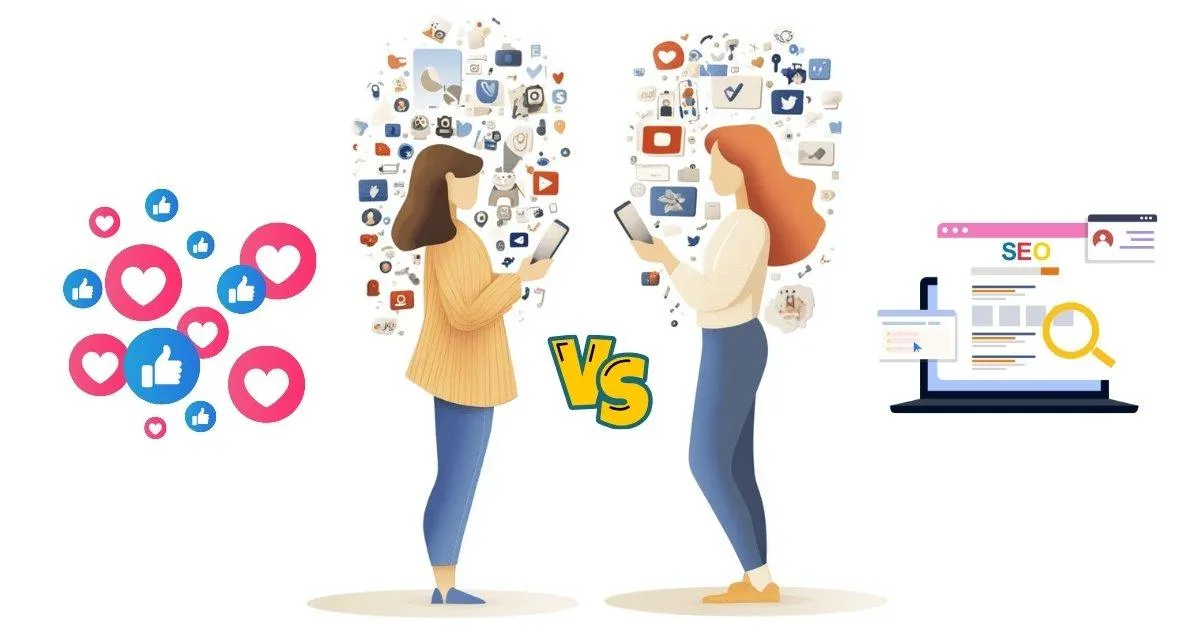
Social media vs SEO: 5 myths that could be hurting your business! Discover the truth about website traffic & sustainable marketing...

If you're looking for alternative ways to market your business, I thought I'd go through my top three...
Local SEO Essentials
Maximise Your Google Business Profile
Learn how to make the most of this essential local business tool so you can leapfrog the competition and gain valuable new clients!
My recommended platform

* this page contains affiliate links - if you decide to purchase FEA Create I may earn commission, the price you pay remains the same. I only recommend software & services I believe in and use in my own, or my clients businesses.
Want more clients without the social media grind?
Join my free newsletter for simple website & SEO tips that help you get found.

Get more traffic & sales through your website without social media!
CONNECT
© Copyright 2026 Built with FEA Create * | designed and developed by thewebsitesuccesshub.com
Based in Marston Moretaine, Bedfordshire - helping women in business worldwide