Tired of the social media treadmill? Download the free local visibility checklist ➔

Before You Pay Someone to Do Your SEO
By Jules White | Published: 8th July 2026 | reading time: 5 minutes

🎙️Listen to this epsiode🎙️
"There is a lot of noise out there right now that SEO is dead. But when you dig a bit deeper into what people are actually telling you, it is still SEO underneath it all."
Have you ever paid someone to do your SEO for months, maybe even years, and still had no real idea what they were actually doing for you? You get a report each month you cannot make sense of, you are not seeing more leads, and if someone asked you what had been done, you would struggle to answer. I speak to business owners in exactly this position all the time, and it is one of the things that fires me up most.
This is the final episode in my Grow Your Business Without Social Media series, and I wanted to use it to answer a bigger question sitting underneath all the current noise about AI search. If you have missed the earlier parts, you can catch up on how I get clients without social media, how networking helped me grow, and how to use content you own. Everyone is asking whether AI has changed everything, and my honest answer is that it has changed the scoreboard far more than it has changed the actual work. When you look past the panic, it is still SEO at the core, and the real decision in front of you is whether to keep paying someone else to do it or to understand it enough to own it yourself.
So in this post I want to walk you through what has genuinely changed with AI search, why doing this work yourself puts you back in control, and who this approach is really for. It is not for everyone, and I will be honest about that too.
Key Takeaways:
It Is Still SEO Underneath:
The fundamentals of showing up in AI search are around 80% of what you would be doing for your SEO anyway, so the panic that everything has changed is overblown.
Understand It Before You Outsource It:
When you understand your own strategy, you can check the work, avoid being bamboozled by tech, and make smarter decisions, even if you choose to outsource later.
The Work Is Front-Loaded But Pays Back:
Unlike social media, where a post is gone within a week, the work you do on your website now keeps paying dividends for months and years to come.
Core Pages First, Not Endless Blogs:
Focusing on your most profitable pages and the searches people make when they are ready to buy is far more valuable than churning out top-of-funnel content.
It Is Not For Everyone:
This works best if you are ready to do the strategy, have the capacity to implement it, and have a genuine need for a steady stream of leads.
Does AI Search Actually Change Anything?
I had a couple of emails land in my inbox recently, and one in particular I found a little bit triggering, if I am honest. There is so much noise at the moment telling us that SEO is dead, or that SEO has completely changed. And yes, things have shifted a little. But when you dig deeper into what these people are actually teaching, it is still SEO sitting underneath all of it. Your website still needs to be well set up so that both the bots and the people reading it can understand it and take the action you want them to take. Ultimately it comes down to the words you use on your website, and where you put them, and that has not really changed.
Here is what has changed in practical terms. Google still handles over 90% of searches, so it is not going anywhere. But whereas Google's bots used to give us ten blue links to scan through and choose from, now people are asking longer questions and getting just one answer back, which might contain a few links, or might contain none at all. If you want your business to be the one mentioned in that answer, your website needs to be set up so that both Google, and the AI bots can find and understand it. And the good news is that the fundamentals of that are around 80% of what you would already be doing for your SEO.
"You cannot skip the SEO and just go straight to being recommended in ChatGPT. You have got to do that primary work on your website first."
One of the emails suggested that keyword-by-keyword content planning needs to give way to topic ownership planning, and to stop asking what we want to rank for and start asking what topics we want AI systems to associate with us. When I read that, I thought it was still fundamentally the same question. We still need our pages set up so the bots can read through them, our content linked together, and real depth on a topic. You might just flip it and think about what question each page needs to answer, or what the purpose of that page is. That is exactly what my Website Clarity Map, helps you plan, so that your pages are not competing against each other, which still matters just as much with the way AI bots crawl a site.
Why I Work Differently From SEO Agencies
When I first got into SEO, I talked to so many business owners who had been paying someone to do it for months, sometimes years. They were not seeing a difference, they did not feel it had helped their business, and they were no closer to understanding why. That is why I only work with business owners who are ready to do the strategy work. I think of myself more as an SEO or website coach, helping you understand what needs to happen on your website to get it showing up in search and connecting with the right people at the right moment.
The other thing I feel strongly about is being able to check the work. I know a few people who have paid for SEO, and when I point out some of the fundamental things that have not been done, they start to question what has actually been happening all this time. They have been receiving reports every month they do not understand, but what has really been done? When you understand this yourself, even at a fundamental level, you are never going to get bamboozled by tech, and nobody can pull the wool over your eyes.
This matters even if you have a healthy budget. As the business owner, you still need to be involved in the strategy, because if your agency is not involving you, how do they know what is going on in your business, what you are focused on right now, or how you want to show up? Doing this work yourself, or at least understanding it, means that if you do decide to outsource later, you know exactly what you are outsourcing and what you are asking someone to do.
What Proper SEO Actually Costs
One of the SEO people I follow shared a video recently breaking down the real costs of running an SEO agency, including the hours involved in actually doing the work. He worked out that if you were spending less than a thousand dollars a month, which is about £850, that is realistically the minimum an agency would need to charge just to cover doing the work properly. And that was even with outsourcing labour abroad, so using cheaper resource than UK-based people on minimum wage.
I think that is a really useful figure to sit with. Because if you are spending three, four or five hundred pounds a month on SEO, it probably feels like a lot of money. And it is, especially if it is not actually bringing leads into your business. But realistically, for that amount, you are not going to be getting much done for you at all. That is exactly why I love working with business owners who want to do this work themselves, who want to understand it, and who want to own the strategy.
- Do I understand enough to check whether the work is actually being done?
- Am I being involved in the strategy, or just sent a monthly report I do not understand?
- For what I am paying, is it realistic that meaningful work is being done?
- If I outsourced this later, would I know exactly what I was asking for?
The Work Is Front-Loaded, But It Compounds
The one thing I really want you to remember is how differently this works compared to social media. Social media demands constant posting and interaction just to keep working for you. SEO is front-heavy instead. There is a lot to do upfront, getting your website set up properly and doing the strategy work, but once that is done, the results compound. You are not stuck on the posting treadmill. After the initial work, you might just create a new page once a month, or simply go back and improve older pages.
I will be honest that this upfront work is not always easy. Getting really clear on your ideal client, the problems you solve, and how to put that into language that connects with what people are actually searching for takes real thought. This was something I realised very quickly when I first started The Website Growth Club, which is why getting clear on this is one of the first things members work through when they join.
"Social media gives us those dopamine hits from posting, but it is not compounding. The work you do on your website now pays dividends in three, six, nine, twelve months and beyond."
As small business owners we wear so many hats, and our websites often end up neglected while our marketing goes into things that do not really move the needle. Social media can feel like we are doing something, but it does not build on itself. The work you do on your website now, whether that is your SEO, your conversions or your Google Business Profile, keeps paying you back long after you have done it. And tying your Google Business Profile in with your website can bring results a lot faster than three months out.
Who This Approach Is Really For
I want to be honest that this is not for everyone. It works best when three things are true. First, you are ready to do the strategy work yourself, because for a small business owner the strategy really is non-negotiable. Second, you have the capacity to implement it, whether that is your own skills, a bit of budget, or someone in your team or a VA who can carry out the changes. And third, you have a genuine, ongoing need for a steady stream of leads, the kind of business that always needs new people coming in.
When you make the decision that your website is an asset worth investing in, everything changes. It becomes the hub of your business, the place you send people whether they find you through search or you point them there yourself. It becomes something you are proud to share, and something that keeps working for you however people are searching a year from now. It will not get there overnight, and it does take time, but you end up in a far better position of control, actually understanding your own marketing rather than handing it over and hoping.
So if you are ready to have less reliance on social media, this is exactly the kind of work I help business owners with, either one-to-one or inside The Website Growth Club. If you want to understand more about the thinking behind all of this, you can read more about my social media is optional philosophy. And if you are not sure where you are stuck or where you are trying to get to, a discovery call is a good place to start.
Notable Quotes:
"There is a lot of noise out there right now that SEO is dead, but when you dig a bit deeper, it is still SEO underneath it all."
"They are sending me these reports that I do not understand every month, but what have they actually done?"
"You cannot skip the SEO and just go to being recommended in ChatGPT. You have got to do that primary work on your website first."
"The work you do right now pays dividends in three, six, nine, twelve months and beyond."
Episode at a Glance:
- 00:00 Welcome and a recap of the Grow Your Business Without Social Media series
- 01:55 Why social media is optional, and what changed when I stepped back
- 04:55 Does AI search actually change things?
- 07:01 Why I work differently from SEO agencies
- 10:04 What proper SEO actually costs
- 12:24 SEO is front-loaded, but it compounds
- 16:14 Showing up in AI search and the Clarity Map
- 19:03 Showing your expertise and building authority
- 23:56 The Website Growth Club approach and core pages first
- 27:54 Front-loading the work and owning your website
- 33:59 Wrap-up and how to work with me
Links to Resources Mentioned:
- 🔗 Episode 136: Growing Your Business Without Social Media — where I kicked off this series
- 🔗 Episode 102: Social Media Is Optional — the most downloaded episode of the podcast
- 🔗 Episode 105: Why Your Brain and Business Deserves a Break From Harmful Social Media — on the harmful effects of social media
- 🔗 Episode 108: Why Your Website Feels So Overwhelming And How to Make It Easier — the episode I mention a lot on making website work feel more manageable
- 🔗 Episode 131: Why Blogging Might Be a Waste of Your Time and What to Do Instead — why not every business needs to blog
- 🔗 The Website Clarity Map — how I map out website strategy so your pages are not competing with each other
- 🔗 Generative Engine Optimisation — more on getting your website recommended in AI search
- 🔗 Social Media vs SEO Myths — cutting through the noise about SEO being dead
- 🔗 SEO for Beginners — the essential basics to check on your own website
- 🔗 Google Business Profile — optimising your profile to help local people find you
- 🔗 Website and SEO 1:1 Consulting — how I work with business owners one-to-one on strategy
- 🔗 My Social Media Is Optional Philosophy — the thinking behind growing a business without relying on social media
- 🔗 Book a Discovery Call — if you are not sure where you are stuck or where you are trying to get to
- 🚀 The Website Growth Club — my membership for established business owners who want their website to bring in clients without relying on social media
Build a business where social media is optional
Inside The Website Growth Club, we help established business owners get found online through their website, without posting every day.
Find Out More∧ Transcript
Welcome to the Website Success Show
Hi, it is Jules here. Welcome back to the Website Success Show, where I teach local and online business owners simple strategies to help you get more traffic and make more sales through your existing website, so you can keep control of your marketing, escape the social media overwhelm, and instead focus on doing what you love.
Recap: Growing a business without social media
Over the last few episodes, we have been focusing on how to grow a business without social media. I kicked off this series back in episode 136 on growing your business without social media, how I do it and how you can do it as well. Then I explored how networking has helped me grow my business without social media, and how collaborations can help you too, with the wonderful Julie C Butler. It has been lovely having some guests on. I do not have many guests on the show, but it all just came together from conversations I had been having, and I wanted to bring in different experts who could help you understand the different ways you can grow your business without social media. Because SEO is just part of that, and your website and the content you own is just part of it too, but it is all part of that bigger picture of business owners who are done with the social media grind.
Since I have been talking about this more and more, I have had more conversations. People come through discovery calls and the first thing they mention is that they love the sound of growing their business without social media, or just having less reliance on it, so they are not burning themselves out slogging away on there and getting nothing back.
Social media is optional
The most popular episode of the podcast by a long way is episode 102, which is social media is optional and how to grow a business without constant posting. I have been talking about social media being optional pretty much from the start of the podcast, back in episode two even, which was about why you do not need to keep feeding the algorithm and how to use your existing content potential to show up in search. So this has been baked in from the start.
Since I broke up with social media at the end of January, things have changed. I do still use it for my cold water swimming community, because I need to check on Facebook once a week whether a swim is happening, as we swim somewhere quite remote. And if someone messages me or tags me, I will respond. But I am not posting, I am not checking it daily, and I am not using it to grow my business. Since I made that conscious decision to step back, I have found I attract more people who like the sound of that. It is very rare that I mention my philosophy on social media and someone says they love using it. The ones who do tend to have a bigger following and are making money from it, which makes sense. But the majority of small business owners I talk to hate it, and hate the mental health implications of using it. I talked about that back in episode 105, why your brain and business deserves a break from harmful social media.
Does AI search change things?
So today I wanted to explore whether AI search changes things. I saw a couple of emails this week, one in particular I found a little triggering, because there is so much noise right now that SEO is dead or SEO has changed. Things have changed a little, but when you dig deeper into what people are teaching, it is still SEO underneath it all. Your website still needs to be optimised, well set up for the bots to read through and for people to understand and take the action you want. Ultimately it is about the words you use on your website and where you put them, and that has not really changed.
Whether you call it SEO, GEO, AI search or AI visibility, it is basically about having your website set up in a way that is searchable and findable and connects with people when they are searching for a business like yours. People are out there searching, particularly for local and niche businesses. They want to find you, buy from you and solve their problem, and if you are the solution, making sure your website gets that across to both the bots and the people really matters.
How I work differently from SEO agencies
I work very differently from SEO agencies, because when I first got into SEO I talked to so many business owners who had been paying someone for months or years, were not seeing a difference, and were no closer to understanding why. I only work with business owners who are ready to do the strategy work. I think of myself as an SEO or website coach, helping you understand what needs to happen on your website. You also need the capacity, either the skills or the budget, to implement the strategy once we have created it, whether that is you, a VA or someone in your team. And you need a genuine need for a steady stream of leads, the kind of business that always needs new people coming in, like a physio or a laser tattoo removal studio.
Doing this work yourself, or at least understanding it, means that if you outsource later you know what you are outsourcing, so you will not get bamboozled by tech or have the wool pulled over your eyes, and you can check the work. I know people who have paid for SEO, and when I point out fundamental things that have not been done, they start to question what has actually happened. One SEO person I follow shared a video breaking down the costs of running an agency, and worked out that spending less than a thousand dollars, about £850 a month, is realistically what an agency needs to charge just to do the work, even with cheaper labour abroad. So if you are spending three, four or five hundred pounds, it feels like a lot, but you are not getting much done. That is why I love working with business owners who want to do this themselves. As I talked about in episode 108, on the three brain modes you need for SEO, you as the business owner still need to be involved in the strategy, even on a bigger budget, or how does your agency know what is going on in your business? It is not for everyone though. If you do not have the capacity, skills, budget, time or inclination to do the strategy, you need to think about the way around that.
SEO is front-loaded but compounds
The one thing I want you to remember is how different this is to social media. Social media demands constant posting and interaction. SEO is front-heavy instead. There is lots to do upfront, but once done, the results compound. You are not posting all the time. You might create a new page once a month, or just go back through older pages. Particularly for a local business with various services, you might not need to blog at all. I talked about this in episode 131, why blogging might be a waste of your time. So much is now answered in the AI answers and overviews, so blogging is not always the way to go. We need unique content that shows our real human lived experience.
The upfront work is not always easy. Getting clear on your ideal client and the problems you solve, and putting that into clear language that connects with what people search for, takes thought. When I started The Website Growth Club I realised I needed to help members get clear on this first, so I added it as an early module. One of my members, Claire, said the Clarity Wizard made a huge difference to how she was thinking about her website and content, that things which were jumbled now felt clear and aligned, and she was excited to get back to work on her homepage. Getting clear on that part first has a knock-on effect through everything, whether you are networking or writing emails.
Showing up in AI search
Google is still over 90% of searches, but it would be good for our businesses to show up in AI search too, and we can start to see this in Google Analytics. Whereas Google used to give us ten blue links to choose from, now people ask longer questions and get one answer, which might contain links or none at all. If we want to be mentioned, our website needs to be set up so the AI bots can find us, and the fundamentals are 80% of what you would do for SEO anyway.
One email said keyword-by-keyword content planning needs to give way to topic ownership planning, and to stop asking what we want to rank for and start asking what topics we want AI systems to associate with us. To me that is still the same question. We still need our pages set up so the bots can read them, our content linked, and real depth on a topic. You could flip it and think about what question each page answers, or its purpose. That is what I map out in my Website Clarity Map so your pages are not competing against each other, which still matters with the way AI bots crawl a site.
Showing your expertise and authority
Fundamentally, we need to show we are an expert in what we do. If you want to show up for a service in your location, you need to show your in-depth knowledge. That does not mean writing a hundred articles, but it does mean covering the topic well, including your own unique experience. If you have had cases where things went wrong, or you know that solving one problem often reveals another, talking about that on your page, a service page or a case study, is powerful because it shows real lived experience. But make sure you know what each page is doing for your business first. I am all about creating content that has a purpose, not content for the sake of it. That is part of my social media is optional philosophy.
We also build authority from other places online, and that does not have to mean social media. If you have social media channels you are stepping back from, just make sure they are still consistent with your current business, then leave them. If you have never been on a platform, there is no need to create an account for the sake of it. What is much more valuable in AI search is getting mentioned from places relevant to your industry and location. Do not ignore your local presence, even if you work online. If you are a member of your local chamber or associations, or you sponsor a local team, make sure they link back to you. Guest articles or speaking that earn a link from a higher authority website can make a big difference in AI search.
The Website Growth Club approach
In the Website Growth Club we focus on core pages first, your most important priority pages, so you are optimised to show up for what you sell. Those are your homepage, maybe your about page, and your most profitable products and services, starting with the most profitable first. Then you expand with supporting pages, additional services or case studies that build authority. You might then need some blogs, but many businesses do not, and if you do, you do it strategically, not churning out something an AI bot could have written. Even then, think about what your customers want to hear, which is your own experience and why it matters to them. Sometimes adding that information to a services page is enough.
Then we think about PR, getting others to mention your business, which you can do while working on your core pages. Podcast interviews, press, or events in your local area all count. That shows it is not just you saying you are the expert. People used to think they needed loads of top-of-funnel content for people who did not know what they did, which is where a lot of SEO starts with blogs. But those information-based queries are often answered in the AI overview and do not bring in people ready to buy. That is why I focus on core pages first. Someone searching for a trauma-informed therapist in their town is much further along the buyer's journey than someone searching why they wake up feeling anxious. If we focus on those commercial-intent searches first, it is much more likely to lead to a sale.
Front-loading the work
Going deep on a topic can feel overwhelming, but again the work is front-loaded. If you are the expert, and you are, this is all in your brain already. Sometimes it is just about getting it out of your head and into your infobase, so you have it to draw on every time you write an email, tweak your website or want some PR. You do the work once and everything else becomes easier. As small business owners we wear many hats, and our websites end up neglected while our marketing goes into things that do not make a difference. Social media feels like we are doing something, with those dopamine hits, but it is not compounding. The work you do on your website now pays dividends in three, six, nine, twelve months and beyond, and your Google Business Profile tied in with your website can be faster than that.
You are probably a lot less behind than you think. This can feel very techie and like a stretch to even start, but the biggest thing is deciding that you own your website, it is an asset, and you want to invest in it as the hub of your business. It will not get there overnight, and it does take time, and your first version will evolve. Mine certainly has, especially over the last few months doing the NatWest Accelerator and getting clear on my ideal clients and services. Doing this work yourself means the strategy is yours, which is non-negotiable for a small business owner, whether you do it with someone one-to-one or in the Growth Club. And whether you implement it yourself or pay someone, you are not beholden to an agency every single month. You end up in a much better position of control, actually understanding your marketing and taking charge of it. You cannot skip the SEO and go straight to being recommended in ChatGPT. I talk to so many business owners who assume their website is SEO friendly when the basics are not even in place, which is something you could quickly fix. Even looking at your homepage and most profitable pages, and checking your page titles, descriptions and headings, can make a massive difference.
Wrap-up and call to action
So if you are ready to have less reliance on social media, check out my website, thewebsitesuccesshub.com, and explore the Website Growth Club to see if it feels like the right path for you. And if you are not sure, book a discovery call and we can chat about where you are stuck, where you are trying to get to, and whether any of my products and services can help you get there faster. Thanks so much for listening, and do not forget, social media is optional.
Discover Your Core Topics: The Roadmap to Website Success
Free Download
Get Found In Search: A Quick Start Guide to SEO & AI Search Visibility
Free Download
Download The Local Google Visibility Checklist & Get Fully Booked Without Social Media
Free Download
Jules White is a Website & SEO Marketing Consultant and Founder of The Website Success Hub.
She helps female business owners & entrepreneurs grow without social media - teaching them how to show up on Google, get recommended in AI search, and turn their website into their hardest working team member. So more of the right people find them, book with them, and buy from them - with intention, not constant hustle.
Read more on the blog

Are you spending hours posting on social media - yet still not getting the clients or sales you want...
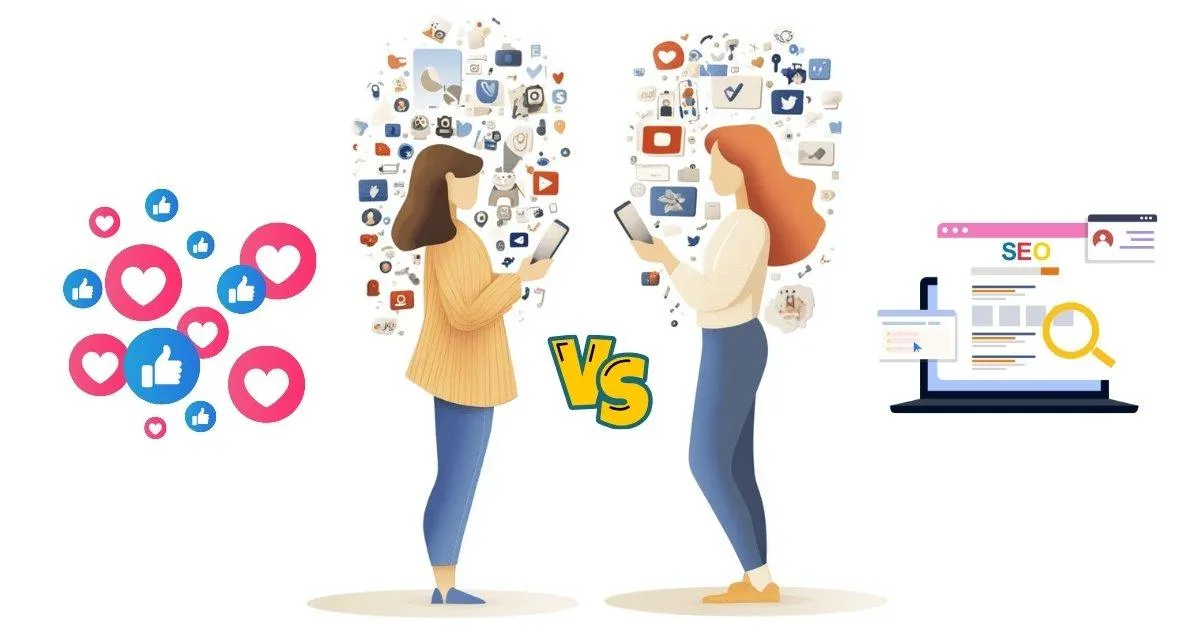
Social media vs SEO: 5 myths that could be hurting your business! Discover the truth about website traffic & sustainable marketing...

If you're looking for alternative ways to market your business, I thought I'd go through my top three...
Local SEO Essentials
Maximise Your Google Business Profile
Learn how to make the most of this essential local business tool so you can leapfrog the competition and gain valuable new clients!
My recommended platform

* this page contains affiliate links - if you decide to purchase FEA Create I may earn commission, the price you pay remains the same. I only recommend software & services I believe in and use in my own, or my clients businesses.
Want more clients without the social media grind?
Join my free newsletter for simple website & SEO tips that help you get found.

Get more traffic & sales through your website without social media!
CONNECT
© Copyright 2026 Built with FEA Create * | designed and developed by thewebsitesuccesshub.com
Based in Marston Moretaine, Bedfordshire - helping women in business worldwide